
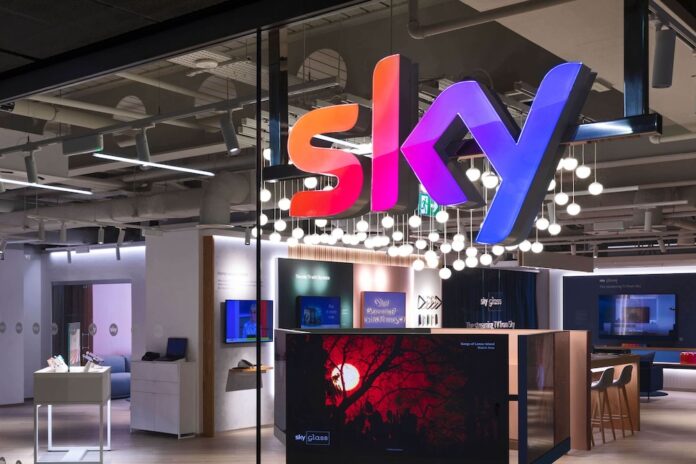
As it wait to be acquired by RTL, Sky is beginning a major transition away from traditional cable delivery towards IPTV for customers on Vodafone’s network
The service provider will, from 10 February, start migrating a large proportion of its linear channels for Vodafone cable customers from classic DVB-C transmission to IPTV, marking one of the most significant distribution changes in the company’s recent history. The move was confirmed by Sky Deutschland in an interview with Digitalfernsehen, which first reported the details of the switchover and its impact on customers.
Under the new arrangement, many Sky channels previously delivered over Vodafone’s cable network will instead be streamed via an IP connection. Sky has already taken initial steps in this direction, having distributed Nat Geo Wild exclusively via IP to cable households since 2025. From February, the approach will be scaled up substantially. Customers affected by the change will require an internet-connected Sky receiver, with Sky planning to contact users who still rely on older hardware and offer them Sky Q boxes capable of receiving IPTV streams.
For customers who already use a Sky Q receiver connected to the internet, the transition is expected to be largely seamless. Sky has said that not all channels will move immediately to IP delivery, with a number of high-profile Sky Sport channels, including UHD variants, continuing to be broadcast via cable for the time being. At the same time, Sky plans to make additional channels available to former cable-only households via IPTV, narrowing historic differences between satellite and cable line-ups.
Streaming is the way
The shift is part of Sky’s broader strategic focus on streaming-based distribution, centred on its Sky Stream platform, which delivers both on-demand content and linear television entirely over broadband. Sky Stream is increasingly positioned as the primary option presented to new customers on Sky’s website, while cable and satellite reception are increasingly positioned as secondary alternatives.
From Sky’s perspective, IPTV reduces reliance on third-party cable networks and eliminates retransmission fees, while enabling greater flexibility, faster channel launches and interactive features such as alternative camera angles for live sport.
The timing of the transition is readily explained in the German market at least. Since July 2024, the wonderfully named Nebenkostenprivileg has ended, removing the long-standing ability for landlords to bundle cable television fees into tenants’ rent. The regulatory change has forced millions of households to make an active choice about their TV supply, accelerating a move away from traditional cable towards IPTV and other internet-based services that can be ordered and cancelled more flexibly.
As a result, several German cable and network operators are adapting their strategies. Vodafone Germany, the country’s largest cable operator, has been steadily repositioning its TV offering around IP delivery, promoting its GigaTV Net platform and emphasising integration with broadband services. While Vodafone continues to operate a large cable footprint, the company has acknowledged that future growth in television services will be driven primarily by IP-based distribution rather than classic cable transmission.
RTL in the picture
Sky’s transition also comes as ownership of the business is set to change. RTL Group has agreed to acquire Sky Deutschland from Comcast, with the transaction expected to complete in 2026 subject to regulatory approval. The deal will bring together RTL’s free-to-air channels and RTL+ streaming service with Sky’s pay-TV and WOW streaming platforms, creating a combined business with around 11.5 million paying subscribers across the DACH region.
The increased emphasis on IPTV and streaming aligns closely with RTL’s stated ambition to build a stronger, more unified digital video proposition capable of competing with global streaming platforms. While the immediate impact of Sky’s move will be felt most acutely by Vodafone cable customers, IPTV is generally becoming the default mode of TV distribution, even for established pay-TV brands long associated with satellite and cable.