

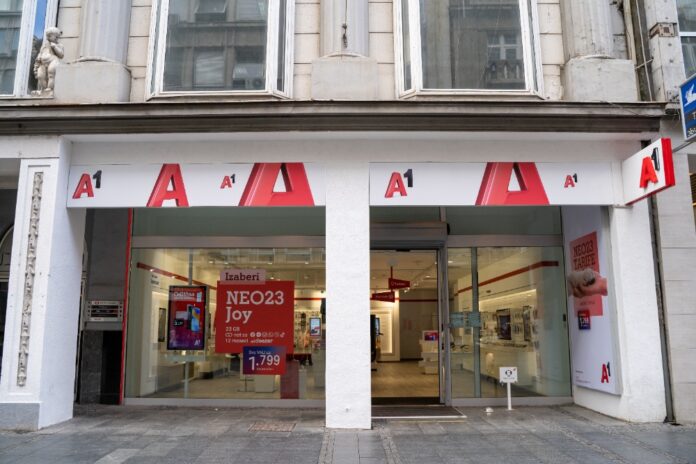
Strong mobile subscriber growth, continued fibre and 5G rollouts and expanding ICT activities supported A1 Group’s operational performance in 2025, offsetting challenges in Austria
A1 Group closed the 2025 financial year with group revenues of €5.58 billion, up 3% year-on-year, and a net result of €613 million, according to its full-year results. EBITDA increased by 3.7% on an operational basis (or 2.0% on a reported basis), exceeding €2 billion for the second time, reflecting growth in both services and equipment revenues.
Operationally, the year was characterised by strong subscriber momentum, particularly in mobile. Total mobile subscriptions rose by 11.3% year-on-year to just over 30 million, with growth largely driven by machine-to-machine connections as well as continued expansion in contract customers. Excluding M2M, the group still recorded growth in postpaid customers, while prepaid subscriptions continued to decline in line with longer-term market trends. Mobile churn remained broadly stable at around 1.2% for the year.
Average revenue per user continued to come under pressure, with ARPU declining to €7.5 for the full year, reflecting competitive pricing, promotional activity and a shift in the customer mix, particularly in Austria. In fixed-line, the number of revenue-generating units increased by 1.7% at group level, with growth in international markets more than offsetting a 5.3% decline in the Austrian base, where legacy voice connections continued to fall faster than gains in higher-speed broadband.

CEE does well
Geographically, A1’s Central and Eastern European (CEE) operations again provided the main growth engine. Revenues across the CEE markets – including Bulgaria, Croatia, Belarus, Serbia, Slovenia and North Macedonia – rose by 8.8%, supported by higher mobile service revenues, broadband uptake and strong demand for ICT and solutions services. EBITDA in the international segment increased by 8.8% on a reported basis, with operational growth of 9.5% once one-off effects were excluded. Bulgaria and Belarus were particularly strong contributors, benefiting from upselling, broadband demand and enterprise services.
In Austria, by contrast, revenues declined by 2.2% amid what the group described as a highly competitive environment. While mobile subscriber numbers edged up by 1.4%, service revenues fell as price pressure, promotions and lower indexation effects weighed on performance. The Austrian operation was also impacted by legal provisions totalling €17 million in Q4 related to an ongoing consumer contract dispute.
In fixed-line, fibre expansion supported demand for higher bandwidths, but this was not sufficient to offset losses in lower-speed broadband and voice services. A1 said it continued to address these pressures through targeted investments, customer segmentation and cost control.
Network investment remained a key operational focus during the year. Group capital expenditure reached €889 million, driven in part by spectrum acquisitions, including a €100 million outlay for 5G frequencies in Serbia, where 5G services were launched in December. Excluding spectrum, capex declined modestly, with spending directed towards fibre rollouts and ongoing 5G expansion across markets. The group plans to invest around €750 million in 2026, excluding spectrum, as it continues these programmes.
Alongside connectivity, A1 continued to scale its ICT activities. A new B2B Delivery Centre was launched in 2025 to provide cloud, security and managed IT services across all markets, contributing to strong double-digit growth in its ICT business with gross revenues up 20% year-on-year. According to CEO Alejandro Plater, around 40% of the group’s growth now comes from business areas that did not exist a few years ago.
Looking ahead, A1 expects revenue growth of 2-3% in 2026, driven mainly by international markets, enterprise demand and further upselling on mobile and fixed networks, while competitive conditions in Austria are expected to remain challenging.

