


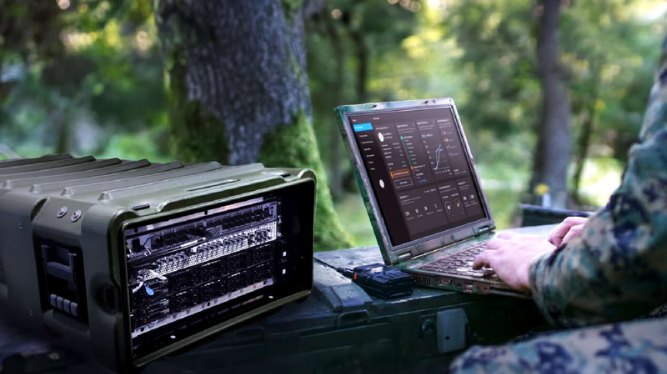
Ericsson has tested a tactical 5G network linking counter-drone and air-defence systems during Atlas 26, Spain’s main joint military exercise.
For the first time, the Spanish Armed Forces connected their counter-drone (C-UAS) systems using a tactical 5G network alone, allowing them to replace traditional cables with a wireless connection that can be quickly set up and moved when needed.
The trial used Ericsson Ultra Compact Core, a compact and mobile 5G system developed for military use. It brought together Ericsson’s 5G Core software, its Container-as-a-Service platform and the hardware needed to run the network.

The network was run by the 5G Spanish Cyber Defence Centre, part of the Joint Cyberspace Command (Mando Conjunto del Ciberespacio).
Ericsson’s equipment used radio frequencies reserved specifically for military use. This gave the systems a dedicated connection, separate from commercial network traffic, while helping to reduce the risk of interference and network congestion.
The 5G network also allowed connected systems to share information with very little delay, helping counter-drone and air-defence equipment work together and respond more effectively to potential threats.
Ericsson Spain, County Manager, Juan Olivera, said: “This exercise has shown how commercial 5G innovation, hardened for defense, can give armed forces a decisive operational edge.
“A sovereign, deployable 5G network puts resilient, high-capacity connectivity exactly where it is needed, with no dependence on fixed infrastructure. By linking sensors to effectors in real time, we help defense forces coordinate their systems more effectively and operate with greater flexibility on the ground.”
IN RELATED NEWS