

Partner content: The evolution toward a fully autonomous network is a strategic imperative, representing a fundamental shift from manual, reactive operations to proactive, intent-driven and self-governing networks
At every stage of this evolution, from simple assisted operations to high autonomy, the inventory system plays a pivotal and increasingly important role.
Why accurate and real-time inventory is a prerequisite for autonomy
The journey to higher levels of autonomous networks is not a single leap but a progressive maturation described by TM Forum-defined Autonomous Network Levels (ANL) framework.
- ANL 1: Foundation – Unification of fragmented legacy databases, delivering a single, accurate baseline for manual and basic automated tasks.
- ANL 2: Semi-automation – Discovery and reconciliation improve data integrity to over 95% and support rule-based, closed-loop automation.
- ANL 3: Unified real-time view – Delivery of near real-time, normalized network visibility essential for cross-domain orchestration and automated root-cause analysis.
- ANL 4: Intent-based operations – Intent-driven, AI-enabled automation, feeding predictive digital twin models for proactive network optimization and risk-free scenario analysis.
- ANL 5: Full autonomy – Support federated, continuously adapting inventory models, enabling zero-touch, predictive lifecycle management across the ecosystem.
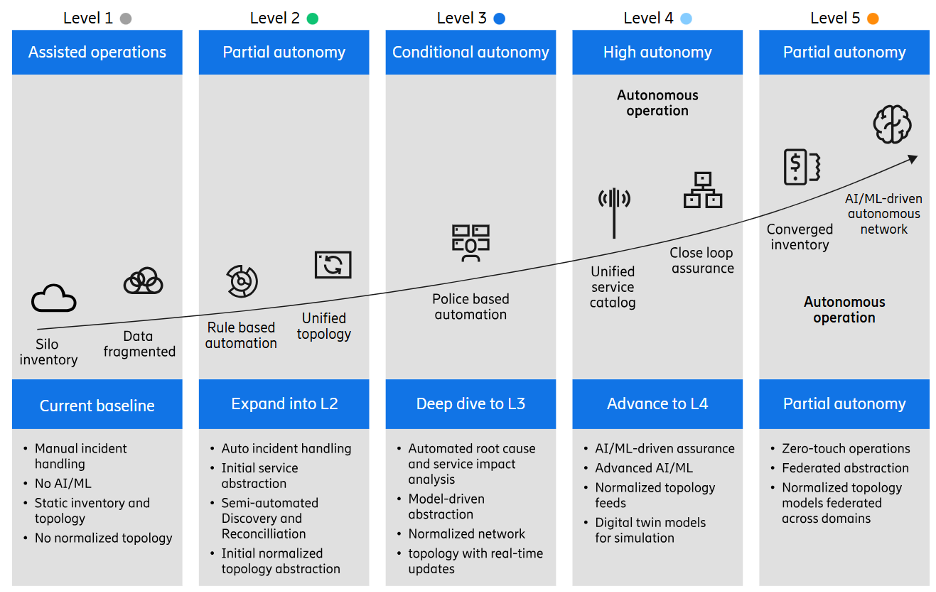
Figure 1. Real-time inventory is foundational for the evolution to autonomous
An autonomous network is, by definition, a data-driven system. Its ability to perceive, analyze, decide, and act without human intervention is entirely dependent on the quality of the data it consumes.
In this context, the inventory system is not merely a database but the network’s cognitive foundation, providing the fundamental truth upon which all autonomous functions are built. Without an accurate, dynamic, and real-time inventory, the pursuit of autonomy is fundamentally unachievable for several critical reasons:
- Autonomy requires verifiable truth: An autonomous system cannot operate on assumptions. Every automated decision, from provisioning a service to healing a fault, is a calculated action based on a specific understanding of the network’s state.
- The “Garbage In, Garbage Out” principle: If the inventory data is inaccurate and contains “ghost” assets, incorrect configurations, or outdated topology, the autonomous system’s decisions will be inherently flawed. Attempting to orchestrate resources that don’t exist or are misconfigured will lead to cascading service failures, eroding the very trust that is essential for an automated system.
- A foundation for logic: An autonomous network requires a single, authoritative source of truth to resolve discrepancies and serve as the final arbiter of the network’s state. A rock-solid inventory provides this definitive, verifiable data, forming the logical baseline for every algorithm and policy that drives the network.
- Intent translation mapping: When an autonomous system receives a high-level command or “intent,” such as “deploy a low-latency slice for a smart factory,” it must translate this abstract goal into a concrete series of actions. This is only possible if it has a precise, end-to-end map of all available physical, logical, and virtual resources. The inventory provides this map, allowing the system to model the optimal service path and resource allocation to fulfill the intent.
- Predictive intelligence (AI/ML) demands accurate data: The advanced capabilities of a highly autonomous network (ANL 4 and beyond) are powered by AI/ML. The efficacy of these models is non-negotiable and depends entirely on the quality of their training data.
- Digital twin depends on real-time data: The concept of a “what-if” analysis using a digital twin, a virtual replica of the live network, is central to high-level autonomy. This simulation environment is only valuable if it is a perfect, real-time mirror of the live network. A comprehensive, continuously updated inventory provides the data feed necessary to create and maintain this high-fidelity twin, allowing CSPs to test changes and predict outcomes without risking the live environment.
Address dynamic challenges with real-time inventory
Dynamic networks create dynamic challenges. The journey to autonomous networks can address some, if not all these challenges.
Many organizations face significant challenges in managing their network, IT, cloud, and service inventories due to siloed data residing in fragmented OSS/BSS systems. This isolation leads to poor data quality and consistency, with inaccurate, incomplete, and duplicate records scattered across silos, often requiring manual reconciliation. Operational processes are heavily dependent on scripts, spreadsheets, and human intervention, especially for provisioning, assurance, and reconciliation tasks.
As a result, service delivery becomes sluggish, with new services taking days or even weeks to launch due to manual coordination and validation. These inefficiencies contribute to high operational expenditures (OPEX), as substantial resources are spent on troubleshooting, reconciling data, and maintaining outdated legacy systems.
Furthermore, visibility and agility are limited, and there is often no unified, real-time view of resources. Without these, it’s difficult to adapt to emerging technologies. Operations tend to be reactive, driven by customer complaints rather than proactive monitoring, making it hard to predict and prevent failures. The complexity of managing hybrid environments spanning physical, virtual, and cloud resources only intensifies these challenges, deepening the impact of data silos and hindering overall performance.
Real-time inventory provides substantial business benefits
Implementing a real-time inventory system offers a range of compelling business benefits that drive efficiency, reduce costs, and accelerate innovation. One of the most significant advantages is the reduction in operational expenditure (OPEX). By automating traditional, manual and time-consuming processes, such as service fulfillment, assurance, and reconciliation, businesses can minimize human intervention and the errors that often accompany it. This automation, powered by accurate and unified network resource data, streamlines operations and directly lowers costs.
Additionally, real-time inventory systems contribute to lower capital expenditures (CAPEX) by providing a precise view of all network assets. This visibility enables you to optimize the use of existing resources, avoid unnecessary purchases, and improve capacity planning. As a result, network build spending is reduced and over-engineering is prevented, ensuring that new capacity is added only when truly necessary.
Beyond cost savings, real-time inventory systems significantly enhance agility by enabling faster time-to-market for new services. Automated, catalog-driven design and provisioning allow you and your ecosystem partners to launch offerings in days or even hours, rather than weeks. This speed is crucial in competitive markets where responsiveness can be a key differentiator.
Moreover, a robust real-time inventory serves as the foundation for advanced automation and AI-driven operations. It supplies the high-quality data required to train machine learning models and supports intent-based networking, in which the network can autonomously configure and optimize itself to meet specific objectives. These capabilities position real-time inventory systems as essential tools for modern, data-driven enterprises.
Ultimately, real-time inventory makes it possible to move from manual or partially automated operations to the high and full autonomy required for self-healing, self-configuring, and self-optimizing networks toward which we are moving.
Inventory platforms, such as Ericsson Adaptive Inventory, are foundational enablers that support and accelerate the journey to autonomous networks level 4, providing the specific capabilities required to advance through each level and deliver as fast as you can sell.
- Read more
- Ericsson OSS/BSS Solutions – Sell. Deliver. Get paid
- AI-powered telecom data and analytics solutions – Ericsson
- Autonomous networks explained
- Accelerate AI innovation with Ericsson Telco Agentic AI Studio
- AI-enabled service orchestration solutions – Ericsson
- TMF-defined Autonomous Network Levels (ANL) framework
About the authors
Matt Whitham, Technical and Solution Sales Support at Ericsson
Matt is an expert in inventory management with a broad OSS background. He is a senior OSS/BSS technical sales leader at Ericsson with a focus on Inventory Management, and Orchestration including Service and Domain Order Management.

Based in Toronto, Canada, Matt has an extensive history of experience in the Telecom OSS domain with roles in Service Delivery, Product Management, and Subject Matter Expertise in both consulting and product companies during his over 20 years in the industry.
Email: matt.whitham@ericsson.com
James Au,Strategic Product Manager at Ericsson
James has extensive experience in inventory management and orchestration within OSS/BSS. Based in the United States, James has over 25 years of experience in Assurance and Inventory products working as Head of Engineering, Program Management, and Product Management. He has a long background in managing and leading development and delivery teams, working with large operators in addressing their OSS/BSS needs.

Currently, he is responsible for driving Ericsson’s strategy vision, and aligning product capabilities with customer automation needs, market trends, and the latest technological and network advancements related to inventory management.
Email: james.au@ericsson.com