

Partner content: The consumer landscape is shifting in ways that challenge traditional go-to-market plans for mobile services. For MVNOs, this shift is not a threat – it’s an invitation
Customer expectations are accelerating faster than most networks can adapt. Monetization windows are narrowing. If mobile virtual network operators (MVNOs) can move fast and stay lean, then this change is an opportunity for them. They can pull users towards services that feel personal, digital-native and frictionless.
The opportunity: a bigger piece of a bigger pie
The ‘low-cost’ customer is no longer a niche. Economic pressures, paired with rising device costs and subscription fatigue, are pushing consumers across all demographics to reevaluate what they’re paying for, and why. MVNOs, once viewed as budget alternatives, are increasingly seen as smarter partners who offer more contextual services as compared to generic nationwide services that MNOs offer.
But cost is only half the story. Younger consumers, especially Gen Z, are rethinking what a mobile brand should feel like for them, and the role it should play in their lives. Meme culture, online identity, and always-on engagement have created new rules, and new roles for service provider brands. MVNOs that understand this can move beyond price wars and into brand relevance.
This doesn’t just open the door to launching, it enables MVNOs to target a larger segment than ever before and yet deliver more than just baseline connectivity. MVNOs can go beyond generic services to deliver offerings by extending insights deep beyond the IT layer, and into the network layer. Any company with a loyal audience and a data-first mindset – lifestyle brands, streaming services, retailers – can launch an MVNO that is relevant to their user base.
The expectation: hyper-personalization is the price of entry
The term ‘customer-centric’ has become almost meaningless through overuse. But in 2025, MVNOs will need to revisit that term and double-down on what it really means. They’ll need to offer hyper-personalization in the form of context-aware dynamic plans, real-time offers, and AI-powered user experiences if they want to capture the increased market share available to them.
Digital-first means more than a nice app. It means offers that align with user behavior, usage patterns, and real time intent that inform upsells, and billing that is as intuitive as a streaming service. Customers’ expectations are driven by the big internet brands, and their focus on being agile, reactive and relevant. They set the bar.
Crucially, they also give customers control – or at least a sense of it. MVNOs must mirror that and empower users to build their own experience. That means UX configurability, tailored recommendations, billing personalization, and the ability to seamlessly interact with third-party services without switching ecosystems.
The Challenge: it’s fast or bust
In the MVNO world, time is the real currency. Time to react, time to launch, and time to iterate. And the time it takes you to understand your customers deeply. If you can’t listen fast, launch fast, adapt fast, and monetise fast, then ROI is going to be a big challenge.
Personalization at this level requires deep network integration. The kind of real-time access and control that MNOs typically don’t offer to MVNOs. For smaller MVNOs, getting this level of capability independently can be cost-prohibitive and difficult to justify without a proven business case. This has historically limited the ability of MVNOs to truly differentiate.
This puts enormous pressure on how MVNOs build their operations. The traditional approach of multiple vendors, heavy integration, and custom development simply won’t cut it. MVNOs, regardless of their business model, need platforms that are cloud-native from the start, but cloud-agnostic by design. Agility must be built in, not bolted on later.
In parallel, the cost of in-house software, especially for small and mid-size players, is often prohibitive. Democratising agility means offering no-code or low-code environments, open APIs, and full-stack control over policy, charging, rating, and billing – all without vendor lock-in.
And with margins tight for customers, ARPU growth can’t be relied upon from higher prices. More likely it will come from relevant bundling, upselling and partnering. MVNOs that can flex their digital core to accommodate everything from gaming subscriptions to IoT plans will win.
Looking ahead: future-proof flexibility
Alongside speed, relevance and personalisation, the final tenet that MVNOs need in order to capture this market opportunity is flexibility. The winners will be those who can adapt without friction and without lag.
That means choosing partners who don’t lock you in. It means choosing platforms that support the full range of MVNO strategies, from enterprise-focused B2B models to influencer-driven D2C plays. And, most importantly, choosing architectures that allow for a rapid launch, and equally rapid evolution and scale.
Bringing it all together
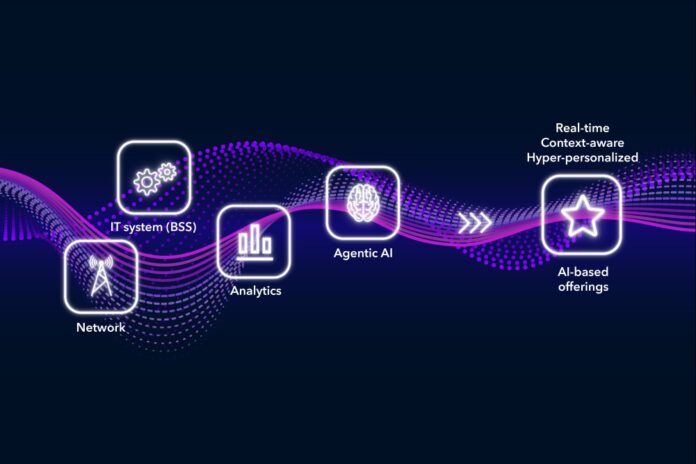
The real breakthrough happens when MVNOs can combine speed, relevance, personalization, and flexibility, all powered by AI. It’s not just about moving fast or offering tailored plans in isolation. It’s about achieving contextual awareness at scale, where insights from the network, IT systems, and AI decision engines converge in real time to understand what the customer is doing, what they need, and when they need it. This is where hyper-personalization becomes more than a buzzword, it becomes actionable.
By tapping into micro-moments, when a customer is streaming, commuting, traveling, or facing connectivity challenges, MVNOs can deliver meaningful offerings that feel intuitive and valuable – all while exceeding the measures of speed and cost to launch. It’s this combination of intelligent systems and agile architectures that enables MVNOs to engage users with precision, not guesswork, and to turn everyday interactions into moments of delight and differentiation.
At Mavenir, we know these pressures and see the opportunities, based on our decades of experience supporting CSPs. Our focus is to anticipate what tomorrow’s MVNOs and MVNEs will need before they even ask for it, whether that’s enabling real-time offer creation, integrating network-level intelligence, or unlocking new revenue streams through flexible partnerships. Being fast, relevant, personalised and flexible – the most important things for you are also the most important things for us.
Visit MVNO Solutions to learn more.
About the author
Sandeep Singh is Senior Vice President and General Manager for Mavenir’s Digital Business Enablement, based in Dallas, Texas. He leads the global rollout of Mavenir’s Business & Operational Support offerings for Enterprise and Consumer domains. Sandeep spent almost two decades in the telco industry and brings leadership & technology vision to the BSS/OSS domain.
He has leadership experience in building strategic and innovative service monetization and business solutions for the enterprise, consumer mobility and convergent communication verticals. He is proficient at optimizing business processes for telco operators during major technology transformation cycles.

He previously enjoyed a distinguished career in Ericsson, Alcatel and OpenNet serving some of the world’s largest telco operators. His career progression ranges from hands-on Product Development, System Integration, Product and Technology Consulting to Direct Sales and Account Management in a highly competitive and cutting-edge technology domain. Sandeep graduated from Delhi College of Engineering in India as an Electrical Engineering major.