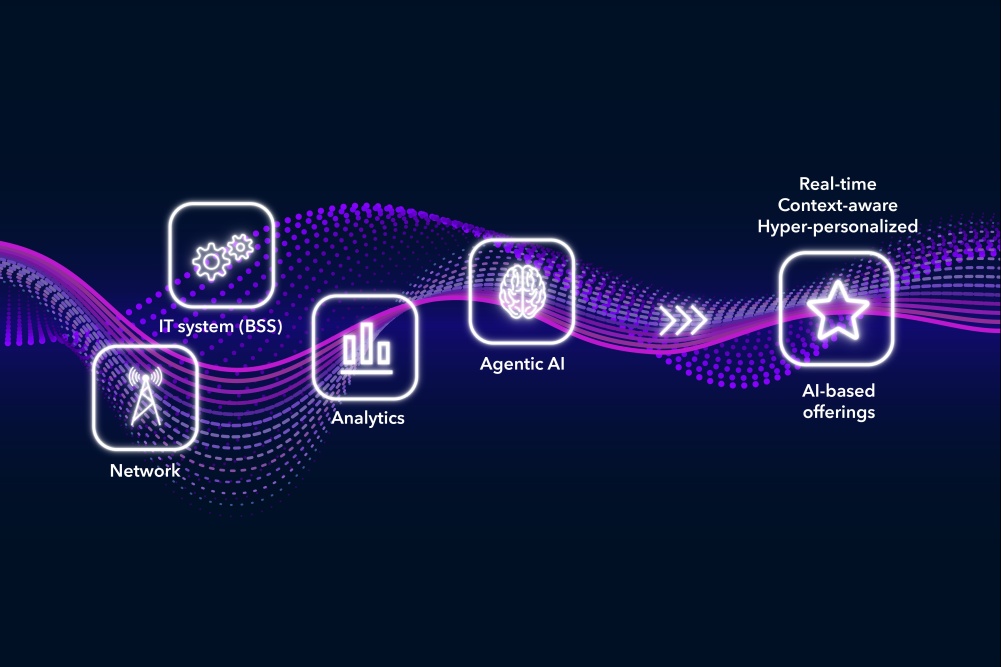


For years, operators have focused on improving network coverage and speeds, while the mobile core has received less attention. But with AI creating new opportunities to improve networks and generate revenues, the core is becoming increasingly important.
Speaking to Mobile Europe, Dejan Leskaroski, Chief Revenue Officer at Mavenir, discusses why the core has been overlooked for so long, how AI could help operators unlock its potential and the challenges still standing in the way of modernisation and monetisation.
“Core has definitely been overlooked in the industry,” he says. “Once you have radio access, everything from mobility management and subscriber authentication to policy enforcement, billing and security happens in the core.”

Now, with AI, automation and cloudification changing how networks operate, operators have an opportunity to do more with infrastructure they already own.
However, the real question is whether they can move quickly enough to capitalise on it.
Learning from 5G’s missed opportunities
The industry has heard promises of new revenue before. When 5G first arrived, network slicing, ultra-reliable low-latency communications and enterprise applications were expected to create new business opportunities.
But turning those capabilities into revenue has been far from straightforward.
“Many of the promises around revenue generation and monetisation in 5G, particularly 5G Standalone networks, were tied to specific 5G capabilities,” Leskaroski claims. “There was considerable dependency on the core, the radio access network and devices.”
Even when operators had the technology in place, they still needed compatible devices, sufficient 5G standalone adoption and cooperation between different vendors.
That made launching new services more complicated than initially anticipated.
AI could offer operators a way around some of those limitations. Rather than waiting for the next network generation or a particular technical standard, operators could introduce services that work across existing networks.
“Take HD voice, voice translation, enhanced security or power savings. None of these is inherently a 5G or 6G concept,” Leskaroski explains.
“Moving towards what you might call an AI-native core, or an AI core by design, opens up opportunities to monetise use cases that aren’t necessarily telecommunications-specific.”
Making better use of the data operators already have
One of the biggest opportunities lies in something operators have had access to for years network data.
“The data has always been there,” says Leskaroski. “Everything from subscriber awareness and location awareness to application usage has always passed through the core. Traditionally, we’ve largely been focused on getting that data from point A to point B.”
AI could help change that by allowing operators to analyse large volumes of information and respond much faster.
“The data was always available. What AI enables now is the ability to process vast amounts of data much faster,” he says.
Security is another area where operators could make better use of the core, he explains.
Services such as deepfake voice detection, spam prevention and identifying rogue agents are increasingly important as AI-driven threats become more sophisticated. Rather than leaving these capabilities entirely to third-party applications, operators could potentially offer them directly through their networks.
Still, Leskaroski is adamant that AI is responsible for every improvement. He says: “Automation and service assurance existed long before AI. AI didn’t introduce those concepts. What it has done is accelerate how quickly operators can perform certain tasks and realise the benefits.”
Modernising the core is no small task
Core networks are complicated environments, often made up of equipment and software from numerous vendors, supporting different generations of mobile technology.
“The core is different,” Leskaroski explains. “It’s typically a multi-vendor environment involving at least two or three vendors, sometimes more.”
That makes introducing new capabilities difficult, particularly when they need to work alongside existing charging systems, customer platforms and operational processes.
According to Leskaroski, simply adding AI to the network won’t solve those underlying problems.
“You can’t simply rip everything out and replace it overnight,” he says. “There needs to be an evolution path that allows operators to modernise their networks in the right way, enabling automation and creating a path towards autonomous networks.”
Could charging become the next bottleneck?
Alongside Core, Leskaroski believes another issue deserves more attention: charging systems.
Many operators still rely on legacy billing and charging platforms that have been heavily customised over the years. They work, but making changes can be difficult and risky.
“Charging is the next frontier that needs to be tackled,” he says. “Right now, the attitude towards charging and billing is often: ‘Don’t touch it. It works.'”
That reluctance could become a problem as operators explore new ways of charging for services, including token-based models associated with AI.
“The danger is that we could fall into the same trap we experienced with 5G. If charging systems don’t evolve alongside the network, operators may find themselves unable to monetise new services, new business models or token-based charging opportunities,” he concludes.
Explore Mavenir’s white paper for expert insights into 5G Core and what it means for operators. Visit the Mavenir Core Strength Resources page to download the white paper and discover more insights.
IN RELATED NEWS