

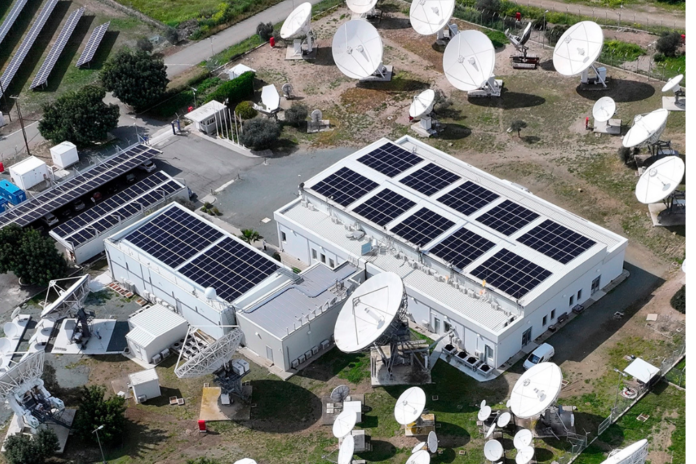
Sparkle and Hellas Sat have completed the first quantum-safe satellite connection between Greece and Cyprus.
The move links Sparkle’s data centre in Metamorfosis, Athens, with Hellas Sat’s infrastructure in Cyprus, with the satellite route covering around 72,000 kilometres, including the journey between Cyprus and the geostationary satellite and then back down to Greece.
The project builds on an earlier test, in which the two companies successfully set up a quantum-safe IPsec connection between two data centres in Greece.

Now, they have now extended the same protection to a live satellite connection.
According to the company, Sparkle’s Quantum Safe Interconnect (QSI) uses secure key delivery and automatically changes encryption keys to help protect sensitive information, which can work with existing network and security systems.
This allows organisations to introduce the technology across different sites without having to completely replace their current infrastructure.
Sparkle, Head of Networking, Cloud, Security & Identity Solutions, Antonella Sanguineti, said: “The extension of QSI to satellite connectivity with Hellas Sat represents a concrete step in the evolution of our quantum-safe portfolio.
“It demonstrates that QSI can be deployed consistently across different network layers, connectivity domains, and operational environments, opening new opportunities to protect communications for customers requiring secure, resilient connectivity across geographically distributed environments.”
Hellas Sat, Director of Ground Operations, Constantinos Kassianides, said: “This successful implementation marks another important milestone in our collaboration with Sparkle.
“By combining our satellite infrastructure with Sparkle’s QSI solution, we can now evaluate the commercial deployment of quantum-safe satellite services for enterprise customers operating across distributed, remote, and mission-critical locations.”
IN RELATED NEWS

