

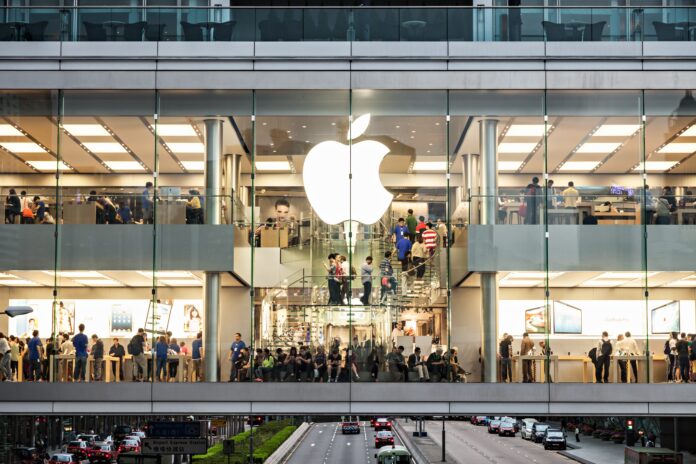
Counterpoint Research said Apple led the global smartphone market with 20% share and 10% YoY growth, the highest among the top five brands
Against many predictions of doom and gloom, global smartphone shipments grew for the second consecutive year in 2025, registering 2% YoY growth, according to preliminary estimates from Counterpoint Research’s Market Monitor. The analysts put this down to “premiumisation” which is business jargon looking to capture the shift to high end features and specifications becoming more desirable for users when upgrading.
This shift to quality was accompanied by financing options and the increasing adoption of 5G devices in emerging markets. Senior Analyst Shilpi Jain said in 2025, consumers increasingly bought premium smartphones and 5G adoption grew in developing markets. Manufacturers shipped early due to tariff concerns, but the actual impact was smaller than expected. Growth varied by region, with Japan, MEA, and parts of APAC offsetting weakness in mature markets.
In Q4 2025, smartphone shipments closed the year on a modest note, growing by 1% YoY owing to inventory built up in previous quarters. Apple led the quarter, accounting for one-fourth of global shipments, its highest-ever share, followed by Samsung at 17%.
In 2026 however, soaring memory prices – as AI servers suck up supply – are going to dampen the outlook for the year as TrendForce has pointed out. Mobile DRAM remains in tight supply, pushing contract prices higher into 2026 despite seasonal weakness. Smartphone brands are stockpiling memory, though the market is entering an inventory adjustment phase after strong early 2025 sales.
Samsung may raise Galaxy S26 prices at its February 25th launch due to surging memory costs – LPDDR5 DRAM up ~70% and NAND flash up ~100% since early 2025. This would increase smartphone manufacturing costs by 5-7% versus 2025, offsetting Samsung’s planned savings from using its own Exynos chip, for example.
“The global smartphone market is set to soften in 2026 amid DRAM/NAND shortages and rising component costs, as chipmakers prioritise AI data centres over smartphones,” said research director Tarun Pathak. “Price hikes in smartphones have already begun to surface. Against this backdrop, we have revised our forecast for 2026 by reducing shipment estimates by 3%.”
He added: “Though the supply crunch will weigh on shipments, Apple and Samsung are likely to remain resilient, supported by stronger supply chain capabilities and premium market positioning, whereas Chinese OEMs concentrated in lower‑price segments will face greater pressure.”
iPhone traction
Apple led the global smartphone market in 2025 with 20% share and 10% YoY shipment growth, the highest among the top five brands. Senior analyst Varun Mishra said: “Apple’s growth in 2025 was driven by its expanding presence and rising demand across emerging and mid‑size markets, supported by a stronger product mix. The iPhone 17 series gained significant traction in Q4 following its successful launch, while the iPhone 16 continued to perform exceptionally well in Japan, India and Southeast Asia. This dual momentum was further amplified by the COVID‑era upgrade cycle reaching its inflection point, as millions of users were due for replacement.”
Samsung, with 19% market share but modest 5% YoY shipment growth, took the second spot in 2025. Its growth was driven by the Galaxy A series, supported by mid-range demand, while the Galaxy Fold7 and S25 series drove traction in premium segments, outperforming their predecessors. While Samsung is under pressure in Latin America and Western Europe, its 2025 growth was aided by strong momentum in Japan and sustained growth in its core markets.
Xiaomi retained the third spot with 13% market share, showing stable performance supported by its “premiumisation” strategy, resilient demand in emerging markets, and balanced product mix across flagship and mid-tier devices. Strong execution in Latin America and Southeast Asia, coupled with effective channel management, helped sustain shipments despite industry headwinds.
vivo came in fourth, with a 3% YoY growth driven by its shift to higher spec devices, strong offline execution in India, and a streamlined product portfolio that captured both high-value upgrades and resilient mid-tier demand. OPPO, on the other hand, declined 4% YoY due to weak demand and fierce competition in its home market China and the Asia-Pacific.
Though it grew in markets like India and the MEA, that was insufficient to offset declines in other regions. With moves afoot to integrate realme into OPPO, the 2025 shipment share for the combined entity will be 11%, taking fourth position in the global smartphone market. Outside the top five, Nothing and Google did well, recording 31% and 25% YoY growth, respectively, in 2025.