

Home Blog Page 29

Vodafone accelerates plan to secure power supply, including AI

It says mobile ops could combine assets and participate in electricity markets, using idle capacity and generating revenue by trading energy using Virtual Power Plant services

Vodafone has fast-tracked its new network resilience programme – the Vodafone Enhanced Power initiative. It is designed to boost resilience for emergency and critical online services, public safety and connectivity for mobile customers across Europe and Africa in the event of a major outage. 

Vodafone says the increasing frequency of climate-related disasters and power grid instability in many regions underlines the need for power resilience in communications infrastructure supporting critical emergency services. Outages have many causes, including floods, wildfires, earthquakes, or blackout incidents, which can affect local areas, regions, or entire countries. Major, extended outages are rare in Europe but last summer’s extreme weather is predicted to have cost €126 billion by 2029. 

Significant blackouts

The launch of the Vodafone Enhanced Power initiative was accelerated after a massive power blackout in April 2025 in large areas in Spain and Portugal, and to a lesser extent France which took down essential services such as telecoms, transport and banking.  At its worst, about 60% of mobile users in Portugal lost connectivity or struggled to connect.

Vodafone Enhanced Power initiative is intended to enhance resilience in more than 10,000 critical mobile infrastructure sites that support emergency services across Europe. It will be implemented throughout Vodafone’s European markets over the next two years, starting with Portugal.

The initiative is based on existing temporary backup systems and new, software-based solutions that use AI to o predict, control and conserve backup time as long as possible. Power supplies are designed to best handle an outage depending on its severity and size on local, regional and national levels. All the solutions also aim to reduce current CO2 emission levels.

Local, regional and national response

For smaller localised outages, which typically affect up to 10 mobile sites, Vodafone will continue to use portable solutions known as Cells on Wheels (COW). This will be complemented by Vodafone’s Instant Network Emergency Response, providing free Wi-Fi and phone charging stations during disaster relief efforts.

Several Vodafone engineers form part of the Instant Network Emergency Response (INER) team. Since 2012, the INER programme has deployed to over 28 disasters worldwide and recently supported in Jamaica after the outbreak of Hurricane Melissa.

To tackle wider regional blackouts, affecting tens or more than a hundred mobile sites, Vodafone will draw on its arsenal of temporary and back up units, as well as deploy Adaptive Power Backup. This is a new AI-controlled intelligent technique to remotely extend the base station battery backup time, potentially doubling it in certain scenarios.

Vodafone has also drawn up a more comprehensive network resilience and power backup plan in the case of a national or cross-border blackout.

In addition to reinforcing over 10,000 critical sites across Europe, Vodafone is initially prioritising the following network areas.

Core mobile sites

There are more than 400 mobile data centres and large backbone sites located in European Union (EU) countries which have battery backups and diesel generators that can provide a minimum of 72 hours power or have guaranteed refuelling support within at least 48 hours.

Aggregation mobile sites

These sites have a minimum of four hours’ backup power for key locations that serve as network junctions to route customers’ data. The four-hour power supply is based on maximum site load.

Critical Access Sites

There are more than 10,000 essential radio and backhaul access sites in Europe that support mobile coverage for emergency services, command and control centres, hospitals, government offices, airports and other major transport hubs. They will be equipped with a minimum of four hours’ backup power. This is the first phase of a wider programme to equip many more sites with the latest generation of battery technology.

Vodafone is also looking to space to build resilience by connecting smartphones and other cellular devices of emergency responders via satellite, even in the most dangerous and challenging environments.

AI to the rescue

Vodafone has launched an AI-driven Adaptive Power Backup service in Greece and is trialling it in Turkey, before deploying it to other markets during 2026. The system uses AI to predict outages and optimise power consumption which enables nearly twice the backup duration and keeps emergency services connected three times longer than the industry standard, the operator claims.

It works by remotely and autonomously shutting down non-essential equipment or putting it into cell sleep mode while maintaining crucial channels for emergency services, phone calls and SMS.

AI reduces capex

The operator also says the use of AI will help mitigate the intensive capital outlay required to deploy additional backup batteries, which would divert resources for network upgrades. Mandating 4-hour backup at every site belonging to all operators in the UK would require a one-time investment of between £2.2 billion and £4.4 billion (€2.6 billion to 5.2 billion), according to a study by the regulator Ofcom, with similar proportional costs predicted across Europe.

Hence Vodafone is exploring new ways to pool resources with other operators and electricity providers. By partnering with aggregators, mobile operators can combine assets to participate in various electricity markets, using idle capacity and generating revenue through energy trading using Virtual Power Plant (VPP) services.

Business customers and consumers could participate in the scheme. Although collaborative schemes offer financial and environmental benefits, most European markets – except for Germany, Ireland and the UK – have yet to develop them fully. Government incentives are necessary to drive reform and investment in this area.  

Africa focus

As part of the programme, Vodafone’s African business Vodacom is turning to AI to overcome industry-wide challenges of keeping mobile sites switched on even during frequent load-shedding (temporary shutdown of electricity to certain areas to prevent the collapse of the entire power grid). The company has developed a strategy centered on two pillars: integrating renewable energy sources and leveraging AI to optimise generator load factors.

Vodacom’s AI-on-the-edge solution prioritises energy sources intelligently during load-shedding, reducing diesel runtime and ensuring base stations operate on the most cost-effective energy source without compromising network availability. Initial results have led to a 10%–15% reduction in the use of diesel and lowered operational costs, minimised site visits, and improved the customer experience.

Aligned with European framework

Vodafone’s resilience programme is aligned with the EU’s cybersecurity and infrastructure protection framework. The operator says it welcomes the opportunity to collaborate with Brussels and national authorities to ensure compliance, accelerate implementation, and explore co-funding opportunities where appropriate.

The most effective way to ensure network resilience is through targeted upgrades at critical sites, complemented by public investment in the power grid to support both Europe’s telecoms sector competitiveness and Europe’s digital ambitions.

The press statement concludes, “Operators alone cannot bear the full burden of these initiatives. To ensure success and sustainability, the industry needs support from governments through dedicated funding and policy alignment. This partnership is critical to delivering the infrastructure and innovation that Europe requires, and maintaining it during any major power outage.”
Telia commits to major rural mobile expansion

The Swedish operator will build new mobile sites across 43 municipalities as part of a multi-year programme to strengthen rural coverage

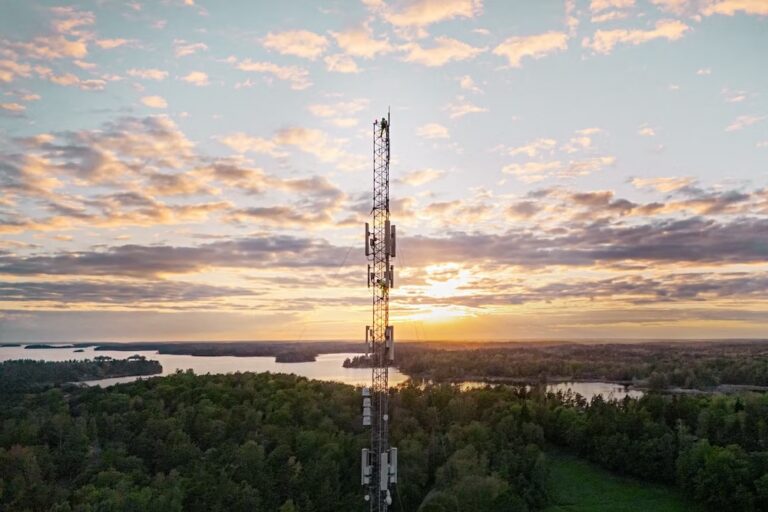
Telia has announced a five-year plan to expand mobile coverage across a further 17,000 square kilometres of rural Sweden, committing around SEK 500 million to new sites and upgrades across 13 counties. The work, which runs until 2030, aims to improve connectivity in sparsely populated areas where demand for coverage has been rising.

The operator said its 4G and 5G networks already reach 99.9% of the population and, following modernisation work due for completion at year-end, will span 94% of Sweden’s land area. Between 2021 and 2025 Telia deployed several hundred new base stations nationwide. The newly announced phase focuses specifically on locations where the operator and municipalities have identified persistent coverage gaps.

“This unique initiative provides significantly better coverage in many of Sweden’s rural areas. It is about more than faster data; it is a societally critical effort that strengthens and secures connected everyday life and Sweden’s digital preparedness. When we say 5G almost everywhere, we really mean it,” said Telia’s chief technology officer Staffan Åkesson, 

According to analysts Tefficient, the programme marks a substantial extension of an already extensive footprint. They note that Sweden “already has fantastic mobile coverage” and that Telia’s commitment will bring connectivity to areas that today remain unserved, in a country with an average population density of just 26 inhabitants per square kilometre. Tefficient also said the scale of the project – 17,000 square kilometres built with new sites over five years – is “great” for rural consumers and businesses.

Telia stated that the investment is needs-based, with site selection guided by regional broadband strategies developed in collaboration with municipalities, county authorities and national bodies. The rollout covers 43 municipalities, ranging from large northern counties such as Jämtland, Norrbotten and Västerbotten to smaller rural pockets in southern regions including Kalmar, Kronoberg and Halland.

Although Telia did not reference spectrum obligations in its announcement, Tefficient pointed out that the expansion aligns with requirements attached to the 900 MHz licences auctioned by the Swedish Post and Telecom Authority (PTS) in 2023. One of the licences included a specific rural coverage obligation. Telia secured that licence at a discounted price, “about 260 MSEK compared to the licences without it”, according to Tefficient, once bandwidth differences are equalised. The licence comes into force on 1 January 2026 and runs until 2048.

The rural build, which Telia says is the only one of its scale currently planned by a Swedish operator, is expected to deliver both improved and entirely new mobile coverage. Telia argues that the programme will support residents, businesses and public services in the targeted areas, while contributing to national resilience objectives.

Wipro lands multi-year deal with Odido NL to upgrade IT, CX

Use of AI is to make technology more human, according to the operator’s CIO, from network services to product innovations, processes, operations, and IT infrastructure

Odido Netherlands has signed a multi-year deal with Wipro* to transform the operator’s IT and improve customer experience enterprises and consumers. Wipro is to combine AI and consulting expertise to streamline operations, boost productivity and reduce costs.

A key element of the engagement is a self-funded model, whereby savings gained from productivity are reinvested continuously to fund new digital initiatives, in a bid to ensure innovation remains sustainable and scalable.

Wipro will lead a full-scale modernisation of Odido’s digital and enterprise technology, IT simplification and automation deploying WEGA and WINGS AI delivery platforms, part of Wipro Intelligence, the company’s suite of AI-powered platforms and solutions.

Ecosystem of agents

The plan is that Odido will build and manage a ecosystem of agent-driven services and solutions to help improve service reliability, IT operations and incident resolution rates.

Additionally, Wipro’s AI chat solution is intended to improve responsiveness and resilience across Odido’s technology ecosystem by delivering contextualised, multilingual, self-service capabilities. 

Wipro says its studio model, powered by Designit, will be central to the engagement: the integration of Wipro’s design studio with its development, design and engineering teams will capture business and users’ early. The plan is that they will be rapidly translated into solutions.

This collaboration should help Odido accelerate time to market and consistently deliver high-quality digital experiences.

More human

“At Odido, our goal is to make technology more human. Everything we do is driven by a human-centric approach. This applies not only to our network services and product innovations, but also to our processes, operations, and IT infrastructure,” said Robert Purdy, Chief IT Officer at Odido Netherlands. “Our collaboration with Wipro supports this ambition and enables us to take the customer experience to a next level.”

Graziella Neuvéglise, Managing Director, Western Europe, Wipro, added, “This transformation is consulting-led, with our teams shaping the roadmap, optimizing processes, and aligning technology with business goals. By combining this expertise with Wipro Intelligence, our unified suite of AI-powered platforms, solutions, and transformative offerings – we’re not just modernizing Odido’s IT infrastructure – but reimagining how technology boosts businesses and puts customers at the heart of their evolution.”

*This deal was mentioned in Wipro Limited’s financial results announcement press release, dated October 16, 2025, for the quarter-ended September 30, 2025, with a description of Odido but without naming the vendor.

AI+AN are changing telecoms, starting with rebuilding basics and trust

AI and autonomous networks together have immense scope to change telecoms – our new research report finds that fixing things that matter most to customers is an excellent start

Telcos can deploy ‘AI infrastructure’ to fix some fundamentals, to regain lost ground. Telecoms has one of the worst Net Promoter Scores of any industry and in some countries, customers are plagued by spam and scam calls: for example a survey by Age UK in 2024 found almost a fifth of the country’s population over 50 years old, about 4.9 million people, are fearful of answering the phone because of fear of fraud and scams.

Philip Otley, Managing Partner for Telco, Infrastructure, Media & Entertainment at consultancy HTEC, says AI is the solution as “it can bring systematic intelligence directly into network infrastructure rather than [using] bolt-on solutions…[so]…CSPs can reclaim value in communications. This is fundamentally different from previous technology waves that simply increased speed or capacity.”

The Airtel case study is a powerful, pioneering example of this.

Airtel’s world first

Airtel launched the first network-based spam detection solution in late 2024 which automatically alerts customers to potential threats. The anti-fraud system uses AI to analyse network traffic and detect suspicious calls, messages and links in real time. In February 2025, the solution was cited in a World Economic Forum white paper, Artificial intelligence in telecommunications, for, “Processing a staggering 2.5 billion calls and 1.5 billion messages daily, it successfully identified close to 1 million spammers every day within the first two months.

“The duallayered protection system integrates network and IT layers for comprehensive coverage. By analysing caller usage patterns, the AI algorithm flags suspected spam communications, offering immediate protection without user action. This approach ensures enhanced security and privacy for all customers.”

In May 2025, the operator said it had achieved a world first when it implemented a real-time, network-wide block on malicious websites across all communication channels. This includes email, browsers, over-the-top messaging apps like WhatsApp, Telegram, Facebook, Instagram, SMS and more.

Directly integrated into infra

The measures are free of charge to consumers because the fraud detection is directly integrated into Airtel’s mobile and broadband infrastructure. This has massively reduced manual reporting and made customers’ experience more secure: by June 2025 Airtel’s AI-powered anti-fraud measures were cutting customers’ financial losses by nearly 70% and there was a 14.3% drop in overall cybercrime incidents on Airtel’s network.

These finding were validated by data from the Indian Cyber Crime Coordination Centre (I4C), Ministry of Home Affairs, published in September 2024. Note, the anti-malicious domain service was launched in Haryana circle, which covers most of the State of Haryana in the north-west of India, with nationwide rollout to follow.

The network-based blocking of malicious websites works by Airtel continuously building its proprietary database of fraudulent domains, integrating data from global threat intelligence databases including Mavenir, Openphish, Mindtest, Google and Microsoft. It is updated every 24 hours.

The solution is modular and easy to integrate with telco systems across network and digital interfaces globally, without changes. Another major attribute is its rapid time to value. When a user clicks a link, the domain is mapped against this database. If identified as fraudulent, it is blocked. If the domain is not in Airtel’s database, the operator uses partners’ APIs to assess it based on several risk factors: the system connects users’ interaction signals……

To read the rest of this case study, along with more case studies and examples of how AI in parallel with autonomous networks are being leveraged by:

China Telecom, Comcast, Colt Technology Services, Deutsche Telekom, Fastweb, Google Cloud, Orange and Orange Business, Singtel, SK Telecom, Swisscom, Telefónica, Telenor, Verizon, Virgin Media O2 and Vodafone

Download our new report, for free, now.

TIM makes case for smarter national infrastructure

The Italian operator’s new report highlights how AI- and IoT-enabled monitoring could cut costs, extend asset lifecycles and reduce environmental impact across road, energy and water networks

Telecom Italia (TIM) has presented new research suggesting that Italy could significantly reduce infrastructure management costs and improve service resilience by integrating AI, IoT and advanced connectivity into critical national networks. The findings come from the Smart Infrastructure report produced by TIM’s research centre with Intesa Sanpaolo Innovation Center, the Politecnico di Milano’s Digital Innovation Observatories and Comtel Innovation.

The study argues that Italy’s ageing infrastructure could benefit from a shift from reactive to predictive maintenance, enabled by digital monitoring tools operating over telecoms networks. According to the analysis, intelligent monitoring systems could prevent up to 27% of structural collapses on older road assets and reduce overall management costs by as much as 31%. With around 1,900 bridges identified as having elevated structural risk and a highly fragmented network of managing authorities, the report estimates that cost savings across planned civil works for 2026–2030 could cumulatively exceed €54 billion.

The report also notes the scale of the challenge: Italy manages approximately 840,000 kilometres of roads, more than 60,000 bridges and over 2,200 tunnels, with over 96% of the network under local authority responsibility. Researchers argue that digitalisation offers a rapid route to improving safety and efficiency at scale.

Monitoring is growing 

The study places the findings within a rapidly expanding market for infrastructure monitoring. Globally, the smart monitoring sector for energy, water and civil assets is projected to exceed €100 billion by 2029, with Europe accounting for around €27 billion. Annual growth of between 10-15% is expected through 2025–2029, with Italy among the fastest-growing markets in both energy and civil infrastructure monitoring.

In the energy sector, the study finds that IoT sensors, smart grid technologies and advanced management platforms could deliver around €700 million in annual benefits by reducing losses, improving peak management and encouraging more efficient consumption through universal smart meter adoption. The report says that transitioning from a centralised power model to more flexible smart grids is necessary to integrate variable renewable sources more effectively.

Water networks face even more pressing issues, with national losses of around 42% and rates above 55% in parts of the south. 60% of the network is more than 30 years old, and a quarter exceeds 70 years. Smart meters currently represent only 17% of installed devices. Expanding digital monitoring could reduce losses sufficiently to generate about €2.6 billion in savings by 2030, totalling around €10.4 billion between 2026 and 2030.

Environmental impact

The environmental impact of infrastructure digitalisation is also highlighted. The report estimates that smart monitoring technologies could cut CO₂ emissions from civil infrastructure lifecycles by up to 30%. For energy networks, reductions linked to lower grid losses, improved peak management and consumer-level efficiencies could prevent more than a million tonnes of CO₂ equivalent annually. In water systems, wider smart meter adoption could reduce emissions by decreasing leakage and lowering demand for bottled water.

The study situates these findings within wider EU policy efforts. European initiatives such as Next Generation EU, the Green Deal and the Digital Compass are directing substantial investment at modernising energy and transport systems, with 40 per cent of Recovery and Resilience Facility funding earmarked for the green transition and up to 13 per cent for transport. Italy has drawn heavily on these funds, though the report notes that administrative complexity remains a barrier to timely project delivery.

TIM said the digital transformation of infrastructure requires broad industry collaboration. Elio Schiavo, TIM’s chief enterprise and innovative solutions officer, said that modernising national infrastructure was “the backbone of the country’s economic development”. He added that creating an ecosystem of advanced companies and start-ups would help accelerate progress.

At the same event, TIM Enterprise recognised the winners of the TIM Smart Infrastructure Challenge, which drew more than 100 participating start-ups, scale-ups and companies. CAEmate was named overall winner for its Digital Twin platform integrating real-time IoT data and predictive AI for preventive maintenance.

Other award recipients included companies specialising in modular robotics for pipe inspection, digital security, indoor positioning, subterranean mapping, “sensorised” bolts for predictive monitoring and satellite-supported maintenance platforms.

Qatar mobile ops launch anti-fraud APIs via GSMA Gateway

Ooredoo and Vodafone Qatar collaborated to provide developers with identity verification tools in the fight against the rising tide of digital fraud

Ooredoo and Vodafone have commercially launched APIs in Qatar to combat digital fraud, delivered via the GSMA Open Gateway initiative, based on CAMARA standards. The APIs enable number verficiation and SIM Swap for developers.

As Qatar’s digital economy grow, online fraud has increased in line with global trends: GASA estimates that criminals scammed more than $1 trillion from victims worldwide last year.

SIM Swap API  

This API monitors and detects changes in the SIM card associated with a mobile number, such as whether a SIM card has been swapped recently, either by returning a timestamp of the last change or a yes/no response for a defined period, such as the last 24 hours. 

Number Verify API 

The API allows enterprises to check if mobile device’s number matches that provided by the customer when the device is accessing an online service or app. 

From banking to e-commerce

Thani Al Malki, Chief Business Officer, Ooredoo Qatar, said, “Developers are at the heart of every digital service used today, and giving them direct access to network-level intelligence is a major leap forward. These new CAMARA APIs allow industries across Qatar – from banking to e-commerce – to build safer, frictionless digital experiences. We’re proud to contribute to a unified framework that raises security standards across the entire ecosystem.” 

Baran Yurdagul, Chief Operating Officer at Vodafone Qatar, added, “Through these APIs, we are enabling developers and enterprises to access secure, reliable identity-verification tools and telecom capabilities that help protect customers and create new services and opportunities. At Vodafone Qatar, we remain committed to bringing world-class, innovative solutions to support the country’s vision for a safer digital economy.” 

Since 2024, Qatar’s central bank has been running a national campaign to tackle financial phishing, aiming to raise awareness and prevent falling victim to scams. The Qatar Financial Information Unit also has a specialised wing to combat digital fraud. 

Play reaches 13,000 base stations as it eyes network independence

Polish operator Play has launched its 13,000th base station in Toruń and will end national roaming by the end of 2025, marking full technological independence for its mobile network

Poland’s Play announced it has reached another milestone in the development of its own mobile network. The launch of its 13,000th base station coincides symbolically with a milestone for the carrier – by the end of the year it will cease using national roaming. 

Play previously had a roaming agreement with T‑Mobile Polska, which expired on 31 December 2021. Play retained a roaming agreement with Orange Polska. In June 2021 Orange and Play signed an addendum extending that national roaming agreement until 2025.

The 13,000th Play base station was launched in Toruń. The operator said the choice of location is also symbolic – this city in the Kuyavian-Pomeranian Voivodeship has for years served as a test environment for new network technologies. Play activated its first LTE transmitters in Toruń, rolled out 5G there, and conducted numerous pilots and tests. Station Number 13,000 is located at the Marian Rose Motoarena, Toruń’s speedway stadium. It is a modern installation supporting all available technologies, including 5G.

Network progress

Since the beginning of 2025, Play’s mobile network has grown by as many as 574 base stations. October was a record month for network expansion, with the operator commissioning 80 new stations. New sites were built both in major cities – including Warsaw, Łódź, Gdańsk, Poznań, Kraków and Rzeszów – and in popular tourist destinations such as Puck, Kołobrzeg and Bukowina Tatrzańska.

Play said dynamic network development is not only about new stations but also ongoing modernisation of existing infrastructure. The year 2025 is a key one for Play in terms of strategic network projects, such as replacing 3G technology and deploying 700 MHz spectrum, which significantly improves coverage.

“Thirteen thousand base stations is far more than a number to us. It symbolises our technological transformation and shows that we are consistently delivering on our promise to build the most modern and advanced network in Poland,” said Play management board member and CTO Michał Ziółkowski. “Our investments allow us to offer excellent quality and coverage, and now to enter a new era of network technology independence. It is a source of pride for the entire team and a foundation for further development of next-generation services.” 

Roam no more

Achieving technological independence will become a reality at the end of this year, when Play stops using national roaming. This marks the completion of the process, which began in December 2019, of phasing out reliance on domestic roaming partners.

Access to other operators’ transmitters was a key element of Play’s strategy in the early years of its network. It ensured connectivity for customers while the company’s own infrastructure was still being developed. Today, Play provides services independently across the entire country.

Telefónica to lay off 6,000, cut stake in Fiberpass, extend Nokia German contract

Telefónica’s having a busy week: investors were less than impressed by its recent Capital Markets Day which has been followed by what looks like decisive action

Hard on the heels of its Capital Markets Day which failed to impress investors, the Spanish business newspaper Expansión reports the group is looking to ditch at least 6,000 jobs – most of them in Spain. At the event, the group CEO Marc Murtra (pictured) announced a halving the dividend: the group’s shares have lost about 15% of their value this year.

Another meeting with unions is to be held next Tuesday to discuss the proposed redundancies which apparently are to be charged to the current financial year. It seems management hopes many of the job losses will come from voluntary redundancies.

Murtra, who was appointed by the Spanish state in January, in a boardroom coup, has previously stated that Telefónica has suffered from “an aversion to making tough decisions”, having too complex a structure, excessive debt and too much short-termism.

Telcos the world over are looking to reduce their workforces: Verizon’s new CEO (who also was appointed abruptly) announced 15,000 jobs are to go while in Europe BT’s CEO said she will erradicate up to 40,000 jobs by the end of the decade (again continuing a trend set by her predecessor) and Liberty Global (operating under the Virgin Media O2 brand in the UK) is looking to shed hundreds of jobs.

Telefónica, Vodafone to sell JV stake

Telefónica and Vodafone are to sell a 40% stake in the joint venture that was formalised earlier this year, Fiberpass in which Telefonica holds 63% and Vodafone 37%.

The investment company AXA IM Alts will acquire the stake for an undisclosed sum. Vodafone Spain is selling a 32% chunk, meaning it will retain 5% after the transaction. According to its owner, Zegona Communications, this will raise €400 million.

Telefónica will retain a 55% controlling stake in Fiberpass, with Telefónica Spain Espana holding 30% and Telefónica Infra 25%.

Telefónica Germany extends Nokia contract

Telefónica Germany has extended its contract with Nokia to 2030. The vendor is to modernise and upgrade its nationwide RAN using Nokia’s Cloud RAN solutions. Nokia say its solutions will also support Telefónica in transforming operations and network performance using AI.

Nokia will supply its AirScale RAN portfolio, including Habrok Massive MIMO radios for the n78 spectrum band, Pandion multi-band remote radio heads, and AirScale Radio small cell solutions. Nokia claims these technologies “will ensure comprehensive coverage and seamless indoor connectivity while driving efficiency and scalability. Additionally, Nokia will provide its latest baseband solutions to enhance Telefónica’s 5G network performance and reliability”.

The deployment will also include Nokia’s Interleaved Passive Active Antenna (IPAA+) solution, simplifying site design and accelerating 5G rollout. The contract includes maintenance and network optimization services.

Telefónica will continue to use Nokia’s AI-powered network management solution, MantaRay NM, which supports purpose-built RAN and Cloud RAN, including data centre hardware and cloud infrastructure.  It provides operation and maintenance capabilities for network elements in core, radio, and transport networks, for managing physical network elements as well as NFVs.

This is the first step towards Telefónica Germany’s network achieving level 4 automation, using AI-powered orchestration solutions.

Sweden tells operators to block older phones that can’t make emergency calls

Ahead of the 2G/3G switch-off, the Swedish regulator is warning that some 4G phones will no longer be able to reach 112 once the old networks disappear

Sweden’s 2G and 3G networks will be shut down in December 2025, and the Swedish Post and Telecom Authority (PTS) has now realised, the country is heading for an Australian-size meltdown as it states that some 4G phones will no longer be able to reach 112 once the old networks disappear. Why Australian? That country just shut down its 3G networks and a spate of recent serious failures of its triple-zero system, have raised concerns about whether telecom providers and regulators had done enough to safeguard emergency call access.

In September, a routine firewall upgrade at Australian telco Optus did not go as planned, triggering a an outage that prevented around 600 calls from reaching the country’s triple zero system. At least four deaths have been linked to the failure. And a recent TPG Telecom customer in Sydney died after their mobile phone, a Samsung device using the Lebara (on the Vodafone-network), failed to connect to triple zero because the phone’s software was outdated and incompatible with emergency-call protocols.

That problem stemmed from older devices that couldn’t “camp on” to an alternate mobile network when the primary network is unavailable. The federal government and regulator acted swiftly.  Inquiries have been launched, fines promised and the communications minister, Anika Wells, called Optus’s failure “completely unacceptable,” describing the operator’s handling as a failure of duty to the Australian people.

More recently, Telstra testing uncovered that over 70 Samsung phone models may also fail to connect to triple zero in an emergency. The failures revealed a systemic risk and now, thousands of users have been notified that they must update or replace incompatible phones, and any devices not updated will soon be blocked.

Fragmented VoLTE 

The problem, which can almost be described as a decade-long time bomb, was the way 4G made mobile networks spectrally efficient allowing operators to offload 3G data – with voice as an afterthought. In essence, it was optional to include support for voice calls in the LTE network (Voice over LTE) when you launched LTE services. 

The issue in all its technical glory is described in detail in this blog by Omnitouch founder Nick Jones. In summary, he points out these failures are not limited to any one country or operator. He explains that while 4G networks were rolled out quickly to deliver better data performance, many operators relied on older 2G and 3G networks to carry voice calls using circuit-switched fallback. 

When those legacy networks disappear, devices that have not been properly configured for VoLTE, or that lack the correct carrier settings, simply cannot make voice calls at all, including emergency calls. Because VoLTE implementation is fragmented and often optional, many handsets that appear to support 4G data cannot reliably support essential voice services.

He also notes that VoLTE compatibility is affected by handset software, firmware, chipset support and operator-specific configuration, with no universal standard guaranteeing emergency-call functionality. This fragmented landscape means consumers often have no clear indication of whether their device will work when they most need it. 

As regulators push ahead with 2G and 3G shutdowns, countries are now discovering that the industry’s years of reliance on legacy fallback has left them exposed. The Swedish warning reflects this structural problem: without proactive checks, certification and clear consumer communication, more nations risk facing the same emergency-calling crises now playing out in Australia.

Sweden’s hits panic button

Tre, Telenor and Tele2 have been relying on affected phones switching to Telia’s remaining 2G network for emergency calls, but PTS says this emergency-roaming solution is not enough and that operators must ensure 112 calls can be placed through their own networks. After an urgent review, PTS has now ordered the operators to identify all affected models, inform customers immediately, and block these phones from their networks in early 2026, with an earlier deadline for certain devices.

To its credit, the European Emergency Number Association (EENA) has been sounding the alarm on this for some time. It pointed out that users with incompatible phones will need to replace their handset or move to an operator that can still route emergency calls via 2G or 3G. These are phones that have 4G, including the technology that enables voice calls over 4G (VoLTE, Voice over LTE), but do not support emergency calls over 4G/VoLTE.

The risk is that users of these phones can make regular calls but not emergency calls. PTS says the inconvenience is necessary to avoid the risk of people discovering too late that they cannot reach 112.

PTS now requires Tre, Telenor, and Tele2 to immediately identify phones that cannot be used on the operator’s network to make emergency calls after 2G and 3G shutdown. Users of these phones must also be informed of the issue immediately. Starting 2 February 2026, operators must block these phones.

For phones that require a specific action, such as removing the SIM card, to switch over to Telia’s network, this requirement applies as of 1 December 2025. PTS’s directive means that users of these phones must either switch to a phone that can handle emergency calls over 4G/VoLTE or switch to an operator that can also route emergency calls over 2G and 3G via its own network.

“We understand that it may be burdensome for users who now need to change phones or operators. At the same time, the alternative is worse. We cannot risk people believing they have a functioning telephony service, only to find out later that they cannot reach 112. We also expect operators to handle this situation properly with their customers,” says PTS director general Dan Sjöblom.

Vodacom signs multi-year Google Cloud deal

Collaboration aims to modernise Vodacom’s data platforms and scale AI-driven services across the group’s African markets

Vodacom has signed a multi-year strategic collaboration with Google Cloud to overhaul its data infrastructure and expand its use of AI across its African footprint. The agreement will see the operator migrate and unify core data platforms on Google Cloud while incorporating the company’s generative AI models, including Gemini, Veo and Imagen, into business operations.

Vodacom said the partnership is intended to support its wider digital transformation programme, with a focus on improving internal processes and enabling new services for consumers and enterprises. According to the operator, the collaboration will provide the foundation for real-time analytics, strengthened data governance and a single environment for large-scale AI deployments.

Vodacom Group CEO Shameel Joosub said the initiative represented “more than a technology upgrade”. He added: “It is a deep commitment to Africa’s digital revolution. Integrating Google Cloud’s data and AI solutions into our business will modernise our infrastructure and fundamentally shift our operational paradigm.” 

He added the partnership would help Vodacom “unlock new opportunities for innovation”, citing applications in network performance, customer care and fraud prevention.

Google Cloud will supply infrastructure and AI development tools through Vertex AI, alongside access to its latest generative models. Maureen Costello, VP for UKI and Sub-Saharan Africa at Google Cloud described the collaboration as “a deep commitment to the continent’s digital revolution” and said Google Cloud aimed to help Vodacom build services that further financial inclusion and expand access to education and digital content.

Vodacom plans to use the partnership to accelerate product development in fintech, enterprise solutions and consumer services. The operator said the agreement forms part of a broader strategy aligned with Vodafone’s existing relationship with Google Cloud, which focuses on scaling digital tools and providing enterprise-grade security across the group’s markets.

The two companies expect the modernised data environment and AI capabilities to support new service creation over the coming years, although detailed timelines for product launches were not disclosed.

- Advertisement -
Latest independent research

Achieving autonomous network operations

Find out more in our new report