

Home Blog Page 30

Rethinking cybersecurity in the age of AI

Partner content: The growing sophistication of AI brings new risks and security concerns – global cybercrime costs are expected to rise to $12.2trn by 2031

As AI drives a new era, enterprises are reimagining their operating models leveraging intelligent automation and data-driven insights, to unlock opportunities for growth and innovation.

However, the growing sophistication of AI also brings new risks and security concerns, forcing senior decision-makers to rethink their cybersecurity strategies. From phishing to deepfake scams, cybercriminals are leveraging generative AI (GenAI) to scale and to enhance the precision and sophistication of their attacks. This amplifies the potential impact of cybercrime.

Cybersecurity Ventures projects global cybercrime costs to rise at 2.5% annually through to 2031, reaching $12.2 trillion a year as the threat landscape matures. To remain resilient, business leaders must adopt new models that prioritise speed, agility, and collaboration across ecosystems.

Shifting landscape of connectivity and security

The rise of connected devices, multi-cloud infrastructures and distributed ecosystems has created a network perimeter that is nearly impossible to define. This exposes organisations to risks that traditional security methods can no longer address.

This complexity demands a rethink of the traditional approach to cybersecurity. At the heart of this transformation lies the need for unified security architectures that operate seamlessly across distributed environments. This means integrating security directly into core network infrastructure and ensuring it adapts to the unique requirements of cloud, edge computing, and multi-device ecosystems.

Foundation for resilience

For enterprises, securing their networks is the first step in defending against cyber threats. While AI has given hackers new tools to exploit vulnerabilities, it also empowers organisations to create stronger defences through intelligent automation.

AI-powered self-healing networks can now identify and isolate breaches autonomously, detecting vulnerabilities faster than human teams could. These systems ensure connectivity even when an attack occurs, enabling businesses to maintain service reliability and protect customer trust.

Moreover, advanced connectivity solutions offer end-to-end visibility into network performance. By providing real-time insights into configurations, capacity, and performance, business leaders can optimise operational efficiency and stay ahead of potential threats.

Addressing a multi-cloud reality

With 92% of businesses adopting multi-cloud strategies, enterprises increasingly find themselves operating across diverse cloud environments. While multi-cloud adoption offers flexibility, it also increases security risks and operational complexity. For senior decision-makers, the priority is to create a consistent and secure environment that provides full visibility into the cloud infrastructure and improves business resilience.

Advanced cloud connectivity solutions enable this by offering on-demand bandwidth, rapid configuration capabilities and dynamic adaptability. For instance, connections can be set up in minutes using intuitive platforms, enabling faster response to fluctuating workloads or emerging threats. These tools offer great flexibility and help ensure business continuity when disruptions occur in any one cloud environment.

Another effective approach to improving resilience is adopting a distributed data processing model like edge computing. By shifting some of the data processing demands from the cloud to local devices, critical functions remain operational even during connectivity disruptions.

The move toward Zero Trust

As organisations expand their digital footprints, the Zero Trust model has emerged as the gold standard for cybersecurity. Zero Trust assumes that no user or device is trustworthy by default, implementing strict access controls and continuous validation across the network.

However, for large organisations, adopting Zero Trust is often daunting due to the complexity of integrating legacy systems with newer technologies. This includes embedding encryption, identity-based access protocols, least-privilege principles and real-time security checks across their networks.

Beyond technology, shifting to Zero Trust requires rethinking security policies and user experiences. Ensuring that security measures do not disrupt the experience of employees, partners, or customers is critical. This is not a quick fix but a process of constant iteration, requiring updated security controls and continuous improvement to adapt to evolving cyber threats.

Strengthening security with AI

AI’s capabilities extend far beyond enhancing network performance. In cybersecurity, AI acts as a force multiplier for overwhelmed IT teams, enabling faster threat detection, smarter prioritisation and more comprehensive responses in real time.

Consider the challenge of vulnerability management. Many organisations rely on fragmented systems and multiple threat monitoring tools that generate high volumes of data. Making sense of this data in time to prevent breaches is nearly impossible using manual methods. Here, AI’s ability to analyse user behaviour, network patterns, and system logs at scale is transformative.

Not only does AI identify vulnerabilities, but it also prioritises them based on risk, recommends immediate fixes, and even simulates potential attack scenarios.

For business leaders, the benefits are clear: faster detection and response mean reduced downtime, fewer disruptions and greater customer trust.

Responsible AI adoption

The promise of AI in cybersecurity is immense, but it doesn’t come without risks. Data privacy concerns, algorithmic biases and ethical challenges can undermine trust if not carefully addressed.

To address these issues, it is important to embed responsible AI practices into every stage of the AI lifecycle. Business leaders can do that by creating data privacy guidelines to protect sensitive customer information and by introducing effective mechanisms for detecting and eliminating AI bias. Ensuring human oversight and fostering a culture of security awareness and continuous education is also essential for minimising the risks of AI.

Balancing innovation and security

The rise of agentic AI brings both significant threats and powerful tools for defence for organisations across all industries. Communication Service Providers (CSPs) occupy a critical position at the intersection of connectivity, data flow and digital environments, so they can play a larger role in the global cybersecurity ecosystem.

By embedding AI and intelligent connectivity into their core operations, CSPs can innovate faster and redefine their business models with new security service offerings. This will allow them to unlock new opportunities for growth for both them and their customers.

To succeed in this AI-driven era, organisations must adopt strategies to address the complex risks posed by evolving cyber threats. Frameworks like Zero Trust, AI-driven tools for threat detection and management, and flexible security architectures for cloud and edge environments, are essential. Equally important is embedding responsible AI practices. This includes fostering trust through data privacy and ethical safeguards and ensuring collaboration across ecosystems. By balancing innovation with robust protection, CSPs and enterprises will be able to transform confidently and succeed in the AI-driven economy.


Germany’s stalled mobile rollout shows uneven progress – Bitkom

The industry association’s implementation monitoring highlights patchy adoption of measures designed to speed mobile network expansion across federal states

Germany’s attempt to accelerate its mobile network expansion continues to be held back by lengthy and inconsistent approval processes, with significant potential still unrealised across the federal states, according to Bitkom’s latest implementation monitoring (as of November 2025). While federal and state governments have adopted elements of the Gigabitstrategie and the Deutschlandpakt, Bitkom finds that many of the most important measures for mobile networks are either only partially implemented or yet to begin.

Delays in the rollout of new mobile sites remain widespread, driven by slow site searches and permits that can stretch well beyond a year in some states. Bitkom notes that more than 90% of planning applications are ultimately approved, yet the time taken to achieve these approvals continues to hinder coverage improvements. With operators still required to meet extensive obligations for traffic routes and remaining “white spots” (not-spots), the association argues that accelerated processes are essential to meet national goals.

One of the central bottlenecks is mast height regulation. Bitkom reports that raising permit-free height thresholds in both urban and regional areas would significantly reduce the volume of permit applications. Urban mast heights of at least 15 metres are needed to support technologies such as beamforming, while in regional areas, where operators must meet wide-area coverage commitments, exemption thresholds should increase to 20 metres. Only a handful of states, including North Rhine–Westphalia, have begun to move in this direction.

The association also highlights the importance of removing friction for mobile temporary sites, which often fill gaps while operators seek long-term locations. At present, these structures are only permit-free for up to three months. Bitkom calls for this to extend to two years, or until a permanent permit is granted. Implementation remains patchy: Brandenburg caps this at 18 months, while North Rhine–Westphalia allows up to 48.

Automatic approval 

Perhaps the most consequential reform, according to Bitkom, is the introduction of “Genehmigungsfiktion” – automatic approval after a set period where authorities do not respond. Bavaria has taken initial steps with an approval granted by default after six months, but Bitkom argues a three-month limit is essential to unlock meaningful acceleration. Several states have not yet begun work on this provision, and others are limiting it to simplified procedures that exclude most mobile masts due to their height.

Other recommendations include reforming setback distance rules for masts in outer areas; either eliminating these requirements entirely or restricting building-equivalent treatment to larger structures above 1.5 metres in diameter. Additional priorities include accelerating electricity connections for mobile sites and enabling rail and road operators to support mobile infrastructure more proactively, including through power provision and space for equipment.

Bitkom also stresses the need for clearer guidance from governments on what constitutes the “overriding public interest” of telecommunications, so local authorities can apply regulations consistently.

Bitkom’s report also extends to fixed-line infrastructure, highlighting similar approval delays for fibre expansion. Measures like expanded use of blanket consents, simplified processes for minor works and parallel digital applications under the Online Access Act are progressing, but only gradually.

Bitkom concludes that while political commitments to acceleration exist, Germany’s mobile and fixed network rollout will remain slow until states move from partial adoption to full implementation of the agreed reforms.

EE hits 5G+ target five months ahead of schedule

The operator has expanded its 5G+ network to 44 million people across the UK, reaching 66% of the population

EE has accelerated its 5G+ rollout, reaching more than 44 million people just over a year after launch and exceeding its original coverage target five months early. The operator had initially aimed to make the technology available to 41 million people, equivalent to 60% of the UK population, by spring 2026.

The latest expansion brings 5G+ connectivity to 20 additional towns and cities, extending coverage to a further 1.6 million people. New locations include Chelmsford, Solihull, Gateshead, Londonderry, Hereford and Hartlepool, among others. The network is now available in all major UK cities and most populous towns.

As part of the rollout, EE has also granted 5G+ access to more than 500,000 existing customers who took out pay monthly handset plans between September 2024 and March 2025 and have compatible devices. The operator said that over 15% of all pay monthly customers now use 5G+.

BT Group chief networks officer Greg McCall said the expansion provides high capacity, ultra-reliable connectivity in areas with high demand for mobile services, particularly in high streets and city centres where network congestion can affect performance.

Beyond enhanced download and upload speeds, EE has been testing network slicing capabilities on its 5G+ infrastructure. The operator has completed several trials at major events over the past year, including at Belfast Christmas market, Sail GP in Portsmouth and England football matches at Wembley Stadium. Network slicing allows operators to guarantee quality of experience and deliver tailored connectivity services to both consumer and business customers.

5G+ remains available on all EE pay monthly handset plans and its Full Works and All Rounder SIM-only plans. The operator’s long-term deployment strategy targets 99% UK population coverage by spring 2030.

Proximus offers tri-band Wi-Fi 7 to Ultra Fiber broadband subscribers

Operator says it is the first telco in Belgium to provide the tech which offers faster, more stable and secure connectivity within the home

Proximus says it is the first telco in Belgium to launch Wi‑Fi 7 tri-band technology to its fibre broadband customers for faster, more stable connectivity. It also has improved security through WPA3 Personal.

Wi‑Fi 6E, launched in 2024 provides more capacity and less interference as it uses 6GHz spectrum, as well as the 2.4 and 5 GHz bands used by Wi‑Fi 6. This makes it particularly useful for households where multiple users are streaming, gaming or on video calls simultaneously.

Wi‑Fi 7 tri-band combines multiple frequencies simultaneously to deliver higher speeds (up to twice as fast as Wi‑Fi 6) with lower latency and “ultra-smooth connectivity” due to use of Multi-Link Operation (MLO) technology.

WPA3 Personal is encrypted, but compatible with new and older devices. The integrated display guides the installer or customer step-by-step, so no app or manual is required.

It also uses 15% less energy than the previous generation and the box itself is made from recycled materials, and works without a fan. It can be reused or refurbished. More features are planned.

Progressive rollout

After a pilot phase in November, Ultra Fiber customers will be invited to upgrade to Wi-Fi 7 early in 2026. Rollout to Giga Fiber customers is planned for the second half of the year.

Jim Casteele, Consumer Market Lead (pictured) at Proximus, said, “This step confirms our ongoing commitment to innovation and reinforces our position as a premium brand in the market. Thanks to the expertise and dedication of our teams, we are once again able to deliver a progressive and reliable Internet experience to our customers.”

Autonomous operations: the path to resilient IT

Partner content: OSS/BSS, cloud and IT environments are becoming more complex – this blog explains why we need the shift to autonomous operations and how to plan the next steps

OSS/BSS, cloud, and IT environments are becoming more complex, and manual fixes or basic automation can’t keep up. Autonomous operations, powered by agentic AI and closed-loop automation, enable self-learning systems that proactively prevent issues. This blog explains why the shift to autonomous operations is vital, how the autonomy loop works, and how to plan your next steps.

The imperative: Shifting to autonomy in IT operations 

For years, operations have relied on people fixing problems as they arise, then on scripts automating parts of the work. But nowadays complexity has outpaced this approach.

OSS/BSS, cloud, and IT environments are growing more complex, with new services, new partners, and multi-vendor systems, while your customers expect everything to “just work”. Running things manually is no longer an option – it’s too slow, costly, and, moreover, risky.

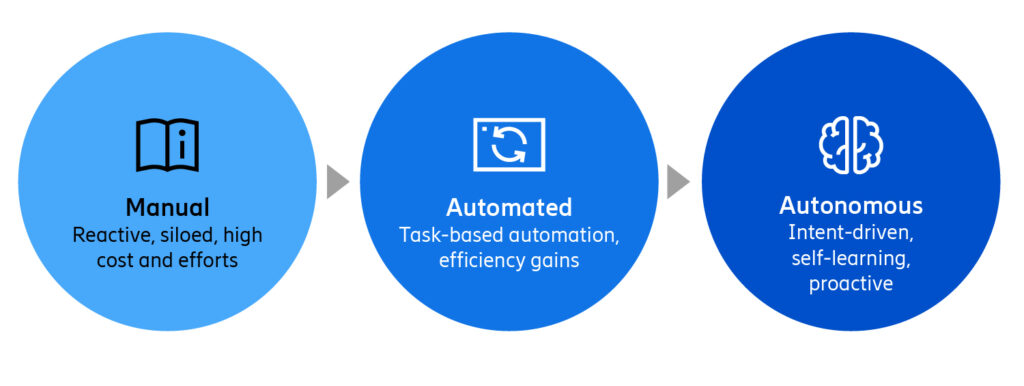
Figure 1: Shift to autonomy for true resilience

Automation has helped, but only to a point. Task-based scripts and siloed fixes deliver efficiency gains but don’t solve the real problem. TM Forum defines five levels of autonomy, from simple assisted automation (Level 1) to fully autonomous, intent-driven networks (Level 5). Most communication service providers (CSPs) are still climbing this ladder. The goal is Level 5 – the real leap for autonomous operations. At this stage, operations become intent-driven, self-learning, and proactive, aiming to prevent issues before they affect your business, while unlocking resilience, reducing costs, and providing consistent performance.

From observability to autonomous operations 

Picture this: your telecom IT is running like a well-oiled machine, fixing issues before they even become problems, and delivering top-notch service with minimal hassle. That’s the magic of autonomous operations in IT for CSPs! It’s like giving your operations a super-smart assistant who’s always learning and improving. Let’s break down how it works and why it’s important for efficient operations.

At the core, four key pillars hold everything together:

  1. Smart data management: Collect and make sense of the flood of data from your different systems.
  2. Intent-driven operations: Translate big-picture business goals into clear, actionable steps.
  3. Agentic AI-powered automation: Let AI handle tasks automatically while avoiding conflicts.
  4. Continuous learning from human actions: Observe how humans solve problems and learn to do it better next time.

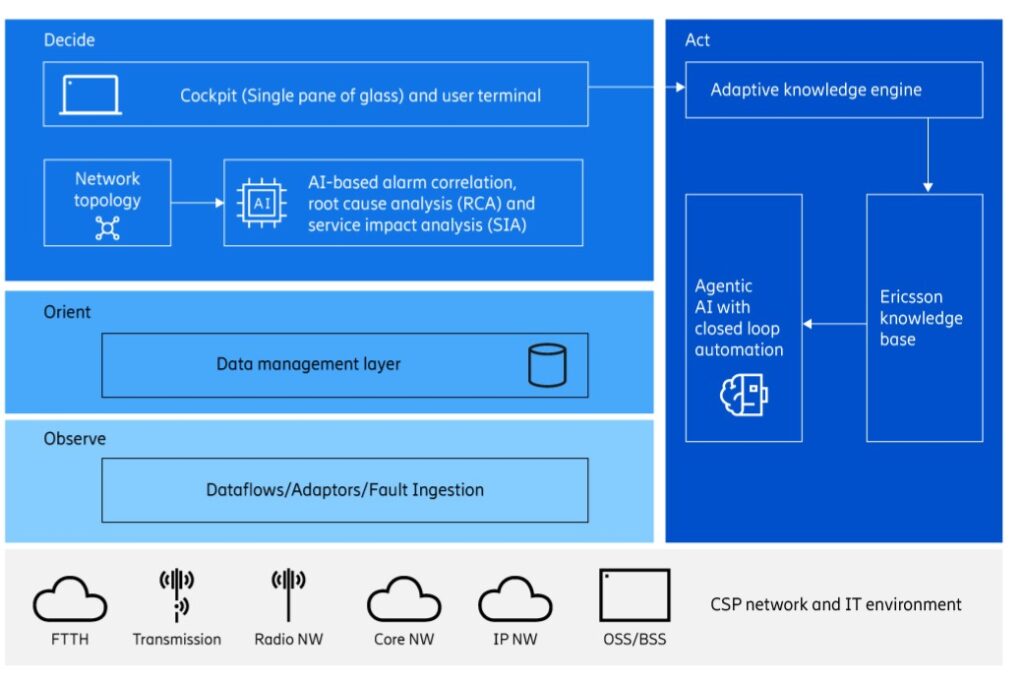
Together, these pillars create what we call the autonomy loop: Observe → Orient → Decide → Act, capturing the journey from awareness to intelligent actions. It starts with observing system telemetry, then orienting that data into context to understand its meaning. Next, AI-driven decisions are made to determine the best course of action, followed by automated execution. As the loop repeats, the system not only resolves issues faster but also learns and adapts, driving continuous improvement.

Now, here’s how it plays out:

  • With intent management and agentic AI, you can turn big business goals into clear operational steps. The system assesses real-time conditions, applies the right instructions, and even handles conflicts automatically.
  • Sometimes, things get tricky, and that’s when the “adaptive knowledge engine” function kicks in. The platform observes how humans resolve the issue, learns from it, and stores that know-how for the future. Over time, the system becomes smarter, faster, and more reliable.

The result? Not just efficiency for you, but also a better experience for your customers.

Take order failure handling as an example.

Traditionally, this is a headache — back-office teams jump between multiple screens, chase data across systems, and repeat rule-based steps over and over again. The result: inefficiency, delays, and poor customer experience.

With an autonomous operations framework, it’s different. An agent can simply express the intent to handle different types of order failures. AI agents then step in – they monitor, detect failures, and apply the right resolution actions automatically. What used to be manual and error-prone now becomes seamless, directly improving customer experience.

Let’s look at how the order failure case is handled through the autonomy loop: Observe → Orient → Decide → Act.

  • Observe: Collect telemetry from IT systems, hardware, and cloud infrastructure across the end-to-end order management process.
  • Orient: This is where raw observations are translated into context. Based on the captured telemetry, a situational picture is built and then analyzed by the Decide layer.
  • Decide: Here’s where the magic happens. This layer is the brain, using AI to spot anomalies in order flow, pinpoint root cause analysis (RCA), and assess service impacts. Agentic AI steps in to analyze the cause of the failure, align it with the business intent for handling order failures, and determine the best next steps.
  • Act: Execute corrective actions, such as adjusting order parameters and retrying orders. If something can’t be fixed automatically, the system doesn’t just stop — it observes how humans handle it and learns to address it next time.

Figure 2: The autonomy loop: Observe -> Orient -> Decide -> Act

In short, autonomous operations aren’t just about cutting costs or automating tasks. They’re about creating IT systems that are constantly watching, deciding, acting, and evolving — serving as a true partner in delivering reliable services at scale.

Enabling autonomy with an end-to-end approach 

The journey to autonomous operations demands a holistic, end-to-end strategy to ensure you don’t just automate isolated tasks, but also build a robust, self-improving ecosystem that can adapt and deliver value continuously.

Ericsson Intelligent IT Suite is strategically designed to empower you on the journey toward autonomous operations. It is built on the key pillars of multi-agentic AI, closed-loop automation, intent-based operations, and extensive telco knowledge to achieve operational autonomy. Our solution is backed by proven experience in multi-vendor environments, supported by seamless integration across cloud and IT layers.

A successful end-to-end autonomous operations journey transforms business resilience, agility, and performance. It should be feedback-driven, self-improving, and built on systems that balance machine autonomy with meaningful human oversight, ensuring enterprise-wide success.

How should you plan your next steps?

Your journey toward autonomous operations needs a clear, step-by-step approach. It begins with identifying your business intents, followed by assessing current maturity levels and conducting a gap analysis. Then we design a roadmap that takes you from basic automation to full autonomy, enabling “Zero wait, Zero touch, Zero trouble” experiences.

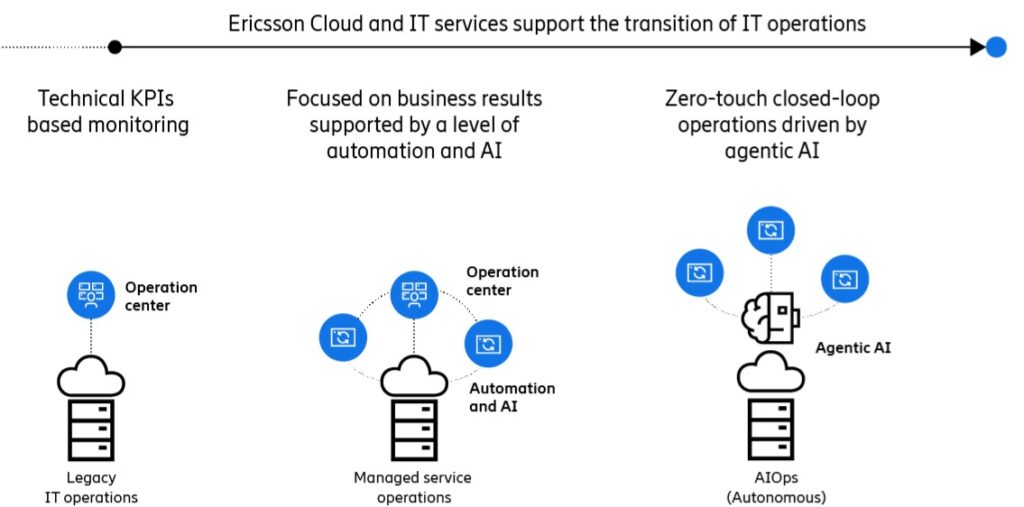
Figure 3: Advancing toward AIOps and autonomy

This approach turns business intents into actionable autonomy. To make this possible, we leverage advanced IT managed services tools, including:

  • A centralized data repository for full observability across IT and infrastructure layers
  • Network topology-based alarm correlation for smarter operations
  • Agentic AI to localize faults, generate and evaluate solutions, and record human actions
  • Automated Method of Procedure (MOP) generation, enhancing the knowledge base continuously

With this end-to-end framework, you can confidently move toward a future of intelligent, autonomous operations.

Your path to autonomy starts here

The shift to autonomy is no longer a question of if, but how fast. You can’t afford to stay locked into operations-centric KPIs that only measure efficiency. The future is about outcomes that reflect customer experience, agility, and resilience.

Autonomous operations, powered by AIOps and agentic AI, unlock this future. They enable zero-touch, closed-loop operations in which problems are predicted, prevented, and resolved before they impact the business.

But autonomy isn’t built on technology alone. It demands expertise, the right tools, and people ready to lead this change. Together, these create the foundation for operations that scale with confidence and deliver lasting business impact.

Read more:

Read the brief: Ericsson Intelligent IT Suite

Learn more about: OSS/BSS Services for better business outcomes

Other related content:

About the authors

Emad Damra, Product Marketing Manager

Emad Damra brings more than two decades of experience in the telecoms industry, specialized in OSS/BSS domain, with a primary focus on E2E ecosystem integration in a CSP’s overall architecture. He is currently part of the global OSS/BSS product marketing team at Ericsson, shaping the narrative, value positioning, and go-to-market strategy of OSS/BSS offerings to drive customer engagement and business impact.

Through his career at Ericsson, Emad has held roles across multiple countries, spearheading presales and delivery of BSS solutions and leading major transformation projects for CSPs across the Middle East and Africa. His unique blend of technical insight and marketing leadership enables him to bridge strategy, execution, and storytelling to articulate the business value of OSS/BSS in the cloud-native era.

Emad holds a Master of Business Administration from the University of Northampton.

LinkedIn: https://www.linkedin.com/in/emaddamra/

Rohit Agarwal, Strategic Product Manager

Rohit Agarwal is a Strategic Product Leader for Managed Services IT Business Offering Area. With deep expertise in telecom, AI, and cloud-native transformation, he focuses on building differentiated products that deliver tangible business value through Autonomous Networks and Operations.

He has a proven track record of shaping high-impact product roadmaps, developing go-to-market strategies, and partnering with senior stakeholders to align product investments with strategic and commercial priorities.

Rohit is passionate about bridging technology and strategies to shape future-ready portfolios that enable CSPs to innovate, monetize, and lead in an AI-enabled ecosystem.  

LinkedIn: https://www.linkedin.com/in/rohit-agarwal-3523351/

Gurpreet Kaur Bedi, Strategic Product Manager

Gurpreet Kaur Bedi is a Strategic Product Manager at Ericsson in Business Area Cloud Software and Services. She has more than 25 years of experience in Telecom, Aviation, infrastructure across product development, Application development and operation experience. She is responsible for OSS/BSS offering strategy, product lifecycle management, and market research, within Ericsson OSS/BSS.

At Ericsson OSS/BSS, she steers the development and market introduction of offering development with latest tools, technology, contributing to the company’s innovative edge in OSS/BSS. Gurpreet’s specialization is in Digital transformation, Operations transformation, Operating model development and customer experience through various programs.

Something has to give as UK altnets rack up £1.5bn losses

Enders Analysis says some British altnets will never be profitable due to a powerful combination of factors and welcomes consolidation – if only it were that easy

Altnet losses expanded to £1.5 billion in 2024, according to a new annual report by Enders Analysis. Research found that alternative fibre network providers faced a tough adverse conditions as earnings before interest, taxes, depreciation, and amortisation (EBITDA) losses continued while interest charges and operating costs rose sharply, but the average revenue per user fell. It stated, “The increasing interest burden [is] looking unpayable under any reasonable scenario”.

The report noted that even the best performers struggle to break even before EBITDA breakeven and there are not sufficient margins to invest in customer acquisition, “resulting in a perpetual cash drain for their investors”.

Taking action

The excellent ISP Review notes, “In response, many altnets have adopted a more protectionist strategy, which involves scaling-back or pausing new fibre deployments and switching their focus to growing customer take-up (commercialisation). Some other network operators and investment firms have also gone on a consolidation drive in an effort to capitalise on the difficult climate and grow scale to hopefully generate better returns (e.g. CityFibre), but this has gone slower than some expected.”

For the less strong performers, things are worsening in the short term as prices fall, but on the upside, the analysis thinks this “impact on the rest of the sector is worsening in the short term as pricing falls, but this “should accelerate the inevitable consolidation into a sustainable wholesale model under CityFibre and/or VMO2/nexfibre”.

The hardest word?

Consolidation is easy to say and hard and sometimes impossible to pull off because of the complexities of integration – David Tomalin, CTO of CityFibre. had some illuminating comments about this in his presentation at a Mobile Europe conference earlier this year. Also where networks are heavily overbuilt, that is in cities and other densely populated areas, those looking to sell their networks might be in for a nasty surprise regarding how much potential buyers are willing to pay versus how much it cost to build them.

Nokia teams up with Trump, investing $4bn in US-based R&D, manufacturing

US Secretary of Commerce: the most innovative tech to power AI, data centers and critical national security will be developed and built in the USA

In press statement, Nokia says “in collaboration with the Trump administration”, it plans to expand its US R&D and manufacturing capabilities. It will invest $4 billion (€3.47 billion) to accelerate innovation “in AI-ready mobile, fixed access, IP, optical, and data center networking technologies”.

The planned investment is over unspecified “multiple years ” and “is in addition to Nokia’s $2.3 billion investment in US manufacturing, R&D, and AI connectivity through its purchase of Infinera”. Infinera has already pledged $456 million investment for two US manufacturing facilities, which received CHIPS Act incentives.

Nokia expects to invest around $3.5 billion in US R&D, “reflecting the company’s strong commitment to advancing the next generation of connectivity and AI technology across all facets of the network, including mobile, fixed, IP, optical, data center networking technologies, and mission-critical/defense solutions. Nokia is committed to continuing the creation of groundbreaking technologies in the US, “following in the footsteps of its award-winning Nokia Bell Labs headquartered in New Jersey”.

About $500 million will be invested in manufacturing and R&D in states that including Texas, New Jersey and Pennsylvania.

Strengthening portfolio and perception?

Nokia claims the US investment plan will strengthen its comprehensive suite of AI-optimised networking solutions, as well as its industry-leading R&D in advanced networking technologies, including automation, quantum-safe networks, semiconductor manufacturing, testing, and packaging, and state-of-the-art material sciences.

Presumably it also hopes the investment will make it a more attractive proposition to US customers of all [stars and] stripes in the public and private sectors, even is $4 billion is a drop in the ocean compared to the billions of dollars being poured into Europe by US hyperscalers.

Howard Lutnick, US Secretary of Commerce, piped up, “Nokia’s $4 billion investment is another Trump administration win for America. Their investment in manufacturing, packaging, and R&D for optical chips means the most innovative technologies that power AI, data centers, and critical national security applications will be developed and built here in the USA.”

Nokia’s President and CEO, Justin Hotard, stated, “Nokia innovation and technologies are foundational to today’s critical network infrastructure. Our expanded investment will help strengthen the nation’s capacity to deliver greater security, productivity, and prosperity through AI-optimized connectivity at scale, while advancing the newest research and innovation that will shape the future of networking for the years to come.”

Hotard is the first American to lead Nokia. Before joining the Finnish network equipment maker and software house, he oversaw the Data Center and AI Group at Intel.

AN + AI change telecoms’ future | Research Report by Mobile Europe

0

AN + AI: will it be different this time? Communication service providers (CSPs) everywhere are under immense pressure to do more and better with fewer resources. That means to reduce network operational costs while improving the quality of services and introducing new ones to gain additional revenues. 

Several years of analytics AI deployments and network automation efforts have failed to slash operational budgets or create much in the way of new revenues. Likewise, despite years of effort and expense, excellent customer experience is still the goal – telecoms still has one of the worst Net Promoter Scores of any industry.

This report rounds up current and emerging opportunities offered by combining various kinds of AI with network automation. 


Chapter 1 looks at how telcos can leverage AI to do what they do but much better, with success stories from Airtel, Telefónica and Comcast. 


Chapter 2 looks at the importance of network automation and what it can deliver in harness with AI, with examples and case studies including Colt, Virgin Media O2, Orange Business, Verizon, Deutsche Telekom and Google Cloud.


Chapter 3 examines progress with new services and looks to the future with examples and case studies from China Telecom, Fastweb, Swisscom, Telenor, Vodafone, Singtel and SK Telecom. 


Our Conclusion consists of 10 recommendations for telcos revving up to profit from AI and network automation, now and in future.

Inside the report

1&1 consolidates infrastructure with €1.3bn Versatel acquisition

The move brings the operator’s fixed and mobile infrastructure under one roof and strengthens its position in Germany’s enterprise market

1&1 AG has agreed to acquire fibre operator 1&1 Versatel GmbH from United Internet in a €1.3 billion intra-group deal. 1&1 AG announced the agreement in an ad-hoc statement, confirming that it will purchase all shares in United Internet Management Holding SE, the sole owner of Düsseldorf-based Versatel.

The supervisory board approved the transaction the same day. Although the headline purchase price is around €1.3 billion, 1&1 said the structure of the deal means there will be no immediate liquidity outflow.

Instead, the consideration will be settled through the offset of existing cash management claims and a flexibly repayable loan from United Internet. Versatel’s existing loan liability of approximately €950 million will also remain in place, backed by a 1&1 guarantee.

The agreement includes an earn-out mechanism that could adjust the final price by up to €300 million in either direction depending on Versatel’s performance between 2027 and 2029, with any adjustment payable in 2030. According to 1&1, an independent external expert has confirmed that the terms are fair and comparable to a third-party transaction.

Business fibre

Versatel brings with it one of Germany’s largest business-focused fibre networks, spanning about 67,000 kilometres and serving more than 350 cities. It also supplies wholesale connectivity to other operators and provides the broadband access, IPTV and VoIP platforms sold under the 1&1 brand. 

Versatel’s strategic relevance has grown this year, following new agreements with Westconnect in April and OXG Glasfaser in August. The deal with Westconnect expanded Versatel’s access to regional fibre footprints, enabling it to deliver higher-capacity business connections across additional municipalities.

Its partnership with OXG Glasfaser – the joint venture backed by Telefónica and Allianz – further strengthened its role as a national wholesale supplier by allowing 1&1 and other operators to reach customers served by OXG’s rapidly expanding FTTH network. 

Crucially, Versatel is the most important infrastructure partner for the rollout of the 1&1 mobile network, delivering fibre backhaul and hosting the company’s data-centre footprint, which comprises four core facilities, 24 edge sites and over 300 far-edge locations.

The deal demonstrates that Germany’s fibre landscape continues to shift, and comes nearly three years after BT sold its German city-fibre assets to Versatel in 2023. By internalising Versatel’s infrastructure, 1&1 aims to reduce its dependence on third-party networks, improve long-term free cash flow and build a stronger integrated fixed-mobile platform with a reinforced B2B segment.

1&1 said the acquisition provides the foundations for its fixed-line, mobile and enterprise operations, describing Versatel as essential to its network expansion plans.

Network slicing progresses apace, at scale, as 5GSA accelerates

Ericsson Mobility Report finds 33 providers are offering some kind of differentiated connectivity and there are 65 live commercial services with Europe leading

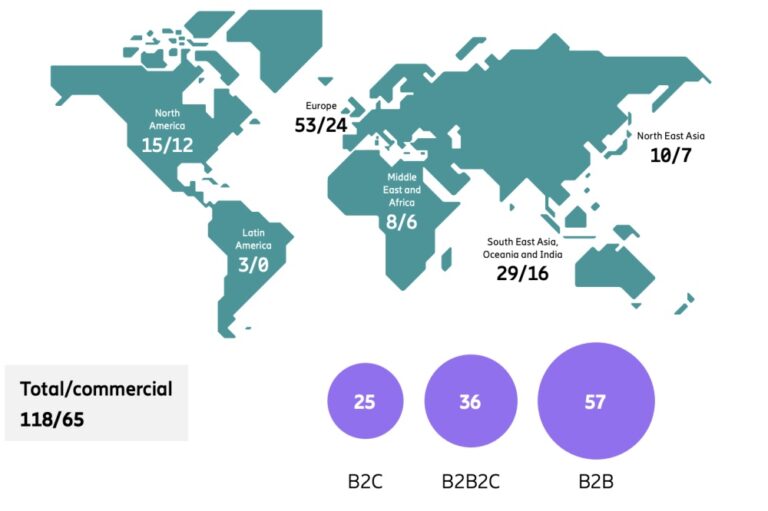
Network slicing is on the up. Some 33 communications service providers (CSPs) are offering a variation on the theme, according to the latest Ericsson Mobility Report. The research identified 118 examples of network slicing and 65 are offering slicing as a commercial services, either as specific subscription services or as add-on for consumers or enterprise customers.

The latest study covers more than 300 service providers across 134 markets and shows a significantly higher number of launches than found in previous studies. The growth is attributed to the accelerating deployment of 5G standalone (5G SA) networks after a slower than expected start.

In the parts of Europe where service providers have deployed 5G SA, they are increasingly active. The region accounts for 45% of all network slicing-related activities globally, including trials, proofs-of-concept and commercial offerings. Proportionally, there are more tests and trials in Europe than in other regions such as Asia-Pacific andNorth America.

Not just the tech

However, although the report attributes progress to advances in network capabilities it also highlights “greater confidence among service providers, with an increasing willingness to explore new monetization models beyond traditional data and speed tiers. The extent of engagement is notable, with many service providers now active in several categories simultaneously.”

Other key findings are that strong growth in both scale and diversity of offerings in network slicing, and that ‘marketing innovations’ – like in-the-moment offers – can seriously outperform traditional channels. Parameters for services can include latency guarantees, priority services, security enhancements, immersive experiences or connectivity targeting specific situations and locations
or app categories.

First mover advantage

The report notes that, service providers that were first to introduce differentiated connectivity, some as early as 2022, have now scaled up their deployments and started to broaden their reach. Across the 65 commercial offerings based on network slicing, half of them are offered by only six service providers.

Two of the service providers have 17 of the commercial offers combined, including both B2C and B2B segments. According to Ericsson’s research this scaling up indicates that the initial launch phase has been successful enough to justify expansion.

The variety of current business models – from guaranteed service tiers for broadcasters to secure connectivity for defense applications – shows both the adaptability of the approach with differentiated connectivity offerings and the market’s appetite for specialised solutions.

B2C and B2B

In the B2C sphere, application or situation-focused services such as video conferencing, gaming, event-specific packages and premium fixed wireless broadband subscriptions make up around
55% of all offerings.

In the B2B area, vertical markets like public safety, transport and logistics, defence and general enterprise use cases dominate.

Out of all commercial offerings globally, 37 and 36% are in Europe and Asia-Pacific, respectively. North America constitutes 18% of the offerings, with just one service provider accounting for three-quarters of all deployments in that region.

The report’s findings on network slicing conclude that the challenge may no longer be whether these services can be launched, but how best to communicate their unique benefits to users, transforming technical capabilities into experiences and outcomes that customers truly value and are willing to purchase.

Read the full report.

- Advertisement -
Latest independent research

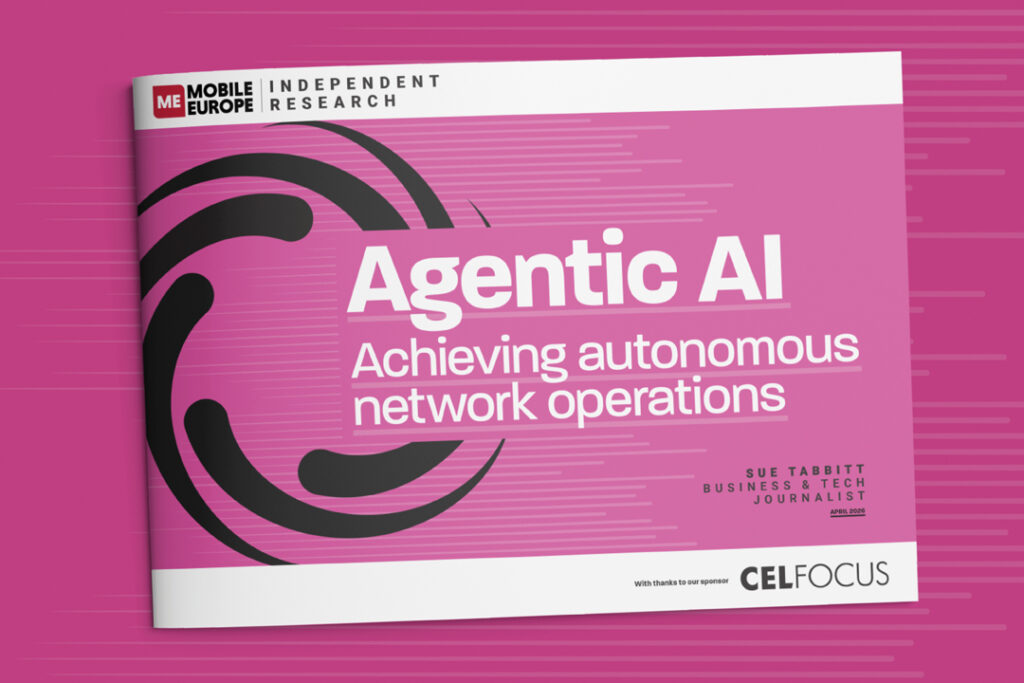
Achieving autonomous network operations

Find out more in our new report