
Walmart Bait has 26m customers in Mexico, fintechs are invading the UK and US Mobile dynamically switches between the main mobile networks, bundles Starlink for home broadband
The no-frills German supermarket chain Lidl has said it will expand its MVNO offer beyond Germany (which runs on the Vodafone network), Switzerland (Salt network) and Austria (Drei’s network) to as many as 30 countries in total.
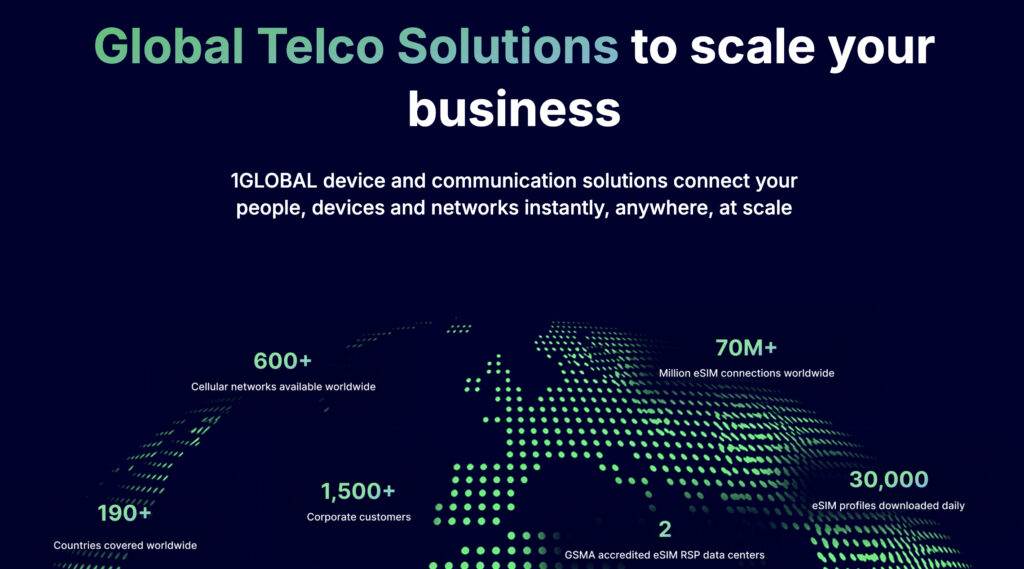
For the planned expansion, Schwarz Group, owner of Lidl, has signed an agreement with mobile comms provider 1GLOBAL. Under the agreement, Schwarz Group will also take a 9.9% stake in 1GLOBAL, which has telecoms licences and partnerships all over the world – see below.
Lidl provided no information about which countries it will target first or when, but said they will include the France, Spain, the UK and the US. The service will be free to sign up for via its Lidl Plus app which has more than 100 million users and will offer discounts on some of its famous, weekly rotation of limited-stock of non-food items which are in the centre aisle, and known in the UK as the ‘Middle of Lidl’.
Schwarz’s strategy is to build a broader digital ecosystem alongside its 14,000 Lidl and Kaufland stores. The Schwarz Digits unit is a rapidly growing European provider of cloud computing and cyber security services. It also invests in AI start-ups.
Leveraging a group’s ecosytem is similar thinking to why Rakuten launched its mobile network in Japan – to provide a platform on which the giant Rakuten e-commerce, fintech and digital content company could upsell and cross-sell across its product ranges to encourage greater spend and brand loyalty.
Not just the supermarkets
Supermarkets have a long established record in the market. For example, Tesco Mobile in the UK is the UK’s biggest MVNO; a 50/50 joint venture with Virgin Media O2 that has been operational for 22 years. Others include Sky and GiffGaff, which has highly innovative rewards system – customers can gain free minutes or more data by helping other customers. Fintechs are also getting in on the UK act including Revolut, Klarna, N26 and Monzo.
The biggest scale supermarket success so far is Walmart’s Bait. It has disrupted the Mexican market and become the second largest mobile player in the country and its stated ambition is to become number one. Already it is the largest MVNO globally with 26 million users. Again, the original idea was to boost customers’ loyalty and spending within the Walmart’s ecosystem.
Germany has a dynamic MVNO sector which accounts for about 18% of the market, dominated by brands operating under Freenet, 1&1 and subsidiary brands of Telefonica, Vodafone and Telekom (Deutsche Telekom’s domestic brand name) as well as Lidl’s no-frills supermarket rival Aldi, with Aldi Talk in Germany and other countries.
France’s Carrefour Mobile operates in several European countries.
Not all MVNOs are created equal
There are many different shades of MVNO, from white labelling a network operator’s services and super simple price plans to doing just about everything EXCEPT providing the network. US Mobile is the exemplar here. For starters, customers are dynamically switched between the three national US networks, AT&T, T-Mobile and Verizon, depending on which provides the best service at any given location at any given time.
In the last few days it also became the first MVNO officially to bundle home internet access via Starlink directly to consumers.
Ahmed Khattack founded US Mobile in 2014 and is its CEO. In his LinkedIn blog four days ago he wrote, “The interesting part isn’t the bundle. Bundles are easy. The interesting part is why ‘Multi-Network’ and ‘Multi-Orbit Convergence’ effectively don’t exist outside of US Mobile.”
It ain’t easy
He answers his own questions, saying, “To deliver a real multi-network experience you have to build a unification layer above all of it…Persistent customer identity across networks. Real-time mediation that ingests wildly different usage feeds as one coherent ledger. A policy engine that moves a line between Warp, Darkstar, and Lightspeed [to avoid naming the actual networkcos] without the customer feeling the seam. Billing that rates satellite gigabytes next to LTE gigabytes next to international roaming on the same invoice.”
This is no mean feat. That unification layer took a decade to build Khattack states, and adding a LEO network just compounds the work “because the same abstraction that hands a line off between terrestrial networks is the one that now hands a session off between terrestrial and celestial”.
Nevertheless, he is clear about his “endgame” which “is Global Multi-Orbit Convergence. Every major network on the ground, every major constellation in the sky, in one plan that follows you anywhere on earth.”
Not what you’d call a no-frills ambition.
.