

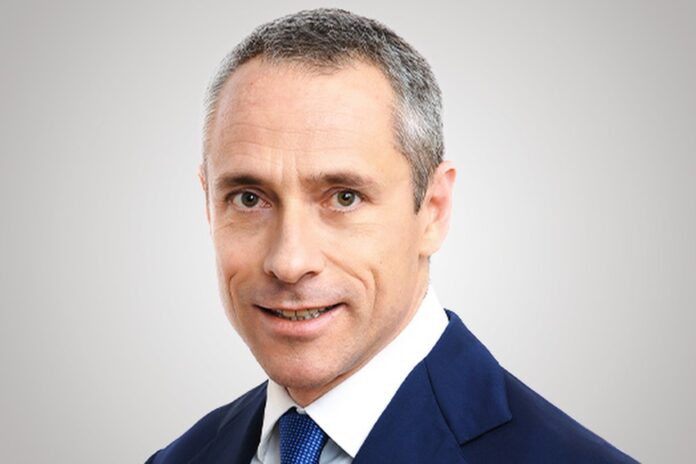
Matteo Del Fante spells out the business justification for his offer in the Financial Times, regardless of state-ownership, and suggests the deal could be complete by September
Matteo Del Fante (pictured), CEO of state-owned postal service monopoly, Poste Italiane, has justified his €10.8 billion bid for Telecom Italia made last month in an interview in the Financial Times [subscription required]. Poste proposed paying for Telecom Italia in shares and cash. The proposal has been criticised by some as it would put the incumbent telco, which now operates minus the national network, back into state ownership.
Telecom Italia was privatised in 1997, in line with the European Union’s strategy to introduce competition into the telecoms sector, but the government maintained a stake, often known as a golden share, enabling it, for example, to prevent a hostile takeover of a national asset.
FiberCop becomes a NetCo

Italy’s right wing government favoured Telecom Italia selling off its fixed network infrastructure (FiberCop), hiving it off into a NetCo. A majority share was acquired by US private equity company KKR in a deal worth €22 billion 2024 including earn-outs, after protracted, bitter wrangling. It seems the travails of that deal are not over, see below.
Earn outs are conditions set in a merger or acquisition whereby the sellers receive additional compensation if the buyer hits specific financial or operational targets after the sale. It is a way of bridging the valuation gap between buyers and sellers, and typically amounts to between 10% and 50% of the price, deferred over three to five years.
In this case, the earn-out payments were worth up to €3.2 billion, linked to specific events taking place, primarily the potential merger of NetCo with its small, state-owned rival Open Fiber. A move the Italian government has put KKR to make from the start.
One of the main drivers for spinning out the NetCo was to reduce Telecom Italian’s debt mountain which it was expected to do by between about €13.8 billion to €14.2 billion.
Poste is biggest shareholder
Poste is already the biggest shareholder in Telecom Italia with a 27.5% stake. Telecom Italia’s shares have more than doubled in the last year. Poste owns Poste Mobile, which has about 5 million customers and that busineness would be folded into Telecom Italia if the deal were allowed to proceed.
Should that happen, the combined enterprise would surpass Vodafone-Fastweb, owned by Swisscom, as Italy’s largest operator. Del Fante told the FT he expects the deal to close by September – a sharp contrast to the drawn out process for spinning off the NetCo.
The FT quote him saying, “Poste has historically been a consumer business, TIM is stronger with corporate clients and public administration. That would broaden our customer base and strengthen our technological offering.”
Poste is 65% owned by the state, having been partly privatised in 2015. Since then its share price has tripled to €21. Del Fante has been at its helm for the last nine years and takes credit for having turned into a tech and services group.
The FT says a tie-up between the two groups would leave the government with a reduced stake of just over 50% in the combined entity
KKR and the NetCo
Things appear to have gone less smoothly since KKR acquired the NetCo. In February 2025, KKR clashed with management at FiberCop. It seems the private equity company is not happy with “a projected €449mn earnings hole” which put prospective dividends in doubt.
Apparently at a board meeting, FiberCop’s management said the predicted shortfall in earnings compared to those set out in KKR’s business plan meant that either the projected billions of euros in dividend payments over the next five years would have to be cut or the company would have to raise more public debt and risk a ratings downgrade.
The main reason for the immediate shortfall was due to the number of lines it expected customers to cancel, which has since been revised upwards.
Apparently the management also said it expected a €2 billion EBIDTA shortfall over the next five years compared with KKR’s business plan.
EC launches probe into deal
Things did not improve in July 2025, when the European Commission opened formal investigation for possible breach of the duty to supply correct information in merger investigation of KKR/NetCo transaction.
On 30 May 2024, the Commission unconditionally cleared KKR’s acquisition of NetCo, concluding the transaction would not raise competition concerns in the European Economic Area (EEA). In particular, the Commission investigated the impact of the transaction on the market for wholesale broadband access services in Italy and concluded that the merged entity would not be able to deteriorate the conditions for access to passive services, or terminate such access, thanks to long-term agreements that FiberCop entered into with several access seekers, including Fastweb and Iliad.
Under the investigation opened last July, the Commission is assessing whether KKR provided incorrect or misleading information about these agreements. This investigation is separate from the procedure which led to the unconditional approval of the KKR/NetCo transaction under the EU Merger Regulation.
NetCo waives dividend, complains about rival
Last October, the beleaguered investment firm KKR said it would waive dividends from FiberCop: its churn rate has accelerated, losing 364,000 lines in the first six months of 2025 – which is generally believed to be a steeper decline than forecast by KKR.
At the time of the buyout, KKR apparently expected FiberCop to have 15 million fibre broadband subscribers by the end of this year but had 14.1 million at the end of June. However, as FiberCop replaces copper connections, customers are not automatically connected to the new infrastructure and can move to a rival if they wish.
Despite government support, the buyout by KKR was unpopular in Italy. As mentioned above, the government is keen for KKR to merge FiberCop with rival Open Fiber. Instead, Reuters reported that FiberCop has filed a complaint with the European Commission alleging Open Fiber has received state aid in breach of the European Union’s competition rules.

