

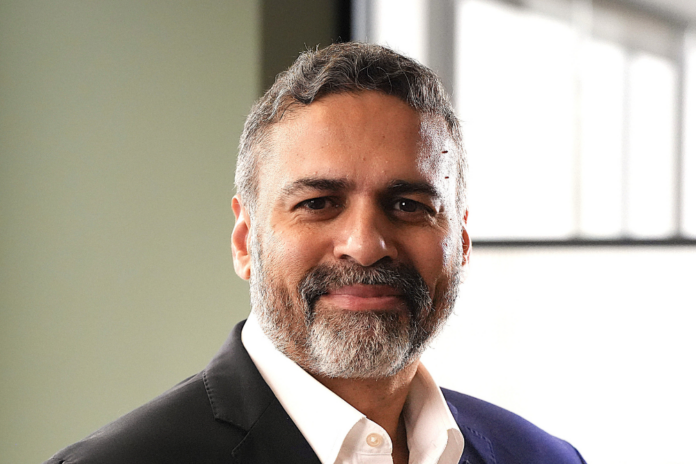
Fibre remains one of the most important, but the most overlooked, parts of the digital infrastructure ecosystem, according to Rajiv Datta, CEO of Nexfibre.
While AI, cloud computing and data centres have dominated industry conversations and attracted significant investment in recent years, Datta argues that fibre is the foundation connecting all these technologies together.
For him, the digital economy ultimately depends on one thing: the ability to move information quickly, reliably and efficiently.

“Fibre is the underlying glue that connects everything together. In the end, all digital infrastructure is about moving information around,” Datta tells Mobile Europe.
“Data centres are where data lives or gets created; mobile networks are another medium to move things around, but even mobile networks require terrestrial, fixed-line fibre networks – much of that traffic gets backhauled onto fibre as fast as possible.”
Despite its importance, Datta believes fibre has not received the same level of attention as other parts of the technology ecosystem.
“The current data-centre phase, driven by AI, previously by cloud, is a huge consumer investment, because people perceive the value and returns based on the activity they’re sensing,” he says.
Why the future of fibre is about more than speed
According to Datta, who has served as CEO of Nexfibre for just shy of three years, fibre development will not only be about delivering faster broadband speeds.
Instead, the focus will increasingly shift towards the wider capabilities of networks, including latency.
As business and consumers now rely more heavily on cloud services, remote working and emerging AI applications, upload capacity and responsiveness will become just as important as download speeds.
“The digital economy isn’t just about browsing websites anymore – it’s two-way: people working from home, uploading as well as downloading,” Datta explains.
“The value of symmetrical service and low latency will become even more critical if you believe in AI applications – a robot in your home cleaning up after you, or whatever you believe the future holds. That will need a different type of connectivity than just speed and data-transfer rates – it’ll be about these other features.”
This, he argues, means operators need to think decades ahead when building networks.
“That’s why building this infrastructure isn’t something you do based on what you understand the needs to be today – it takes decades to build, and you need to put in something that can leverage applications you don’t even know about yet.”
The UK’s altnet problem
The opportunity for fibre is significant, but the UK market faces a major challenge: fragmentation.
Over the past several years, the country has seen a wave of investment into alternative network operators, with more than 100 altnets entering the market.
However, many are now facing financial pressure as borrowing costs have increased and original growth plans have become harder to achieve.
“The UK fibre market is highly fragmented, it’s an incredibly fragile market right now, financially speaking as most of those companies are loss-making,” he notes.
Datta argues that the sector’s current difficulties are not because investment was unavailable. Instead, the problem was that too many operators entered the market without the scale needed to build sustainable businesses.
“This is a market where infrastructure investment has come through in a big way over the last four or five years, but by taking on large amounts of debt, which has to be repaid, with interest payments to manage – and interest rates have gone up.”
The solution? He believes is consolidation- creating larger, financially stronger operators.
“Consolidation is a pathway to creating something sustainable – a genuine challenger in the marketplace, which was the original objective,” he adds.
Why fewer, stronger operators could be the answer
For Datta, scale is essential in the wholesale fibre market.
This comes as national broadband providers need partners that can offer broad coverage, alongside more operational efficiency with the end goal of investment.
“Scale is crucial. Obviously, you need several key elements for success, but as an infrastructure operator, a wholesale infrastructure operator – scale really matters,” he says.
He believes the UK cannot support dozens of fully scaled fibre operators and that consolidation is needed to create companies capable of competing with Openreach.
Nexfibre’s own strategy is focused on building that scale. The company’s planned transaction with Netomnia, Datta says, demonstrates how consolidation can unlock further investment into the sector.
What happens without consolidation?
Datta warns that if consolidation does not happen, the consequences could be felt across the industry, from operators and investors to consumers.
“If consolidation doesn’t happen, there will be more of what we are seeing- failing altnets, some in a messier way,” he explains.
“You could see a world where an altnet fails with tens or hundreds of thousands of customers and they simply don’t have service. We haven’t had that yet, but it could be a messy outcome,” he concludes.
IN RELATED NEWS

